
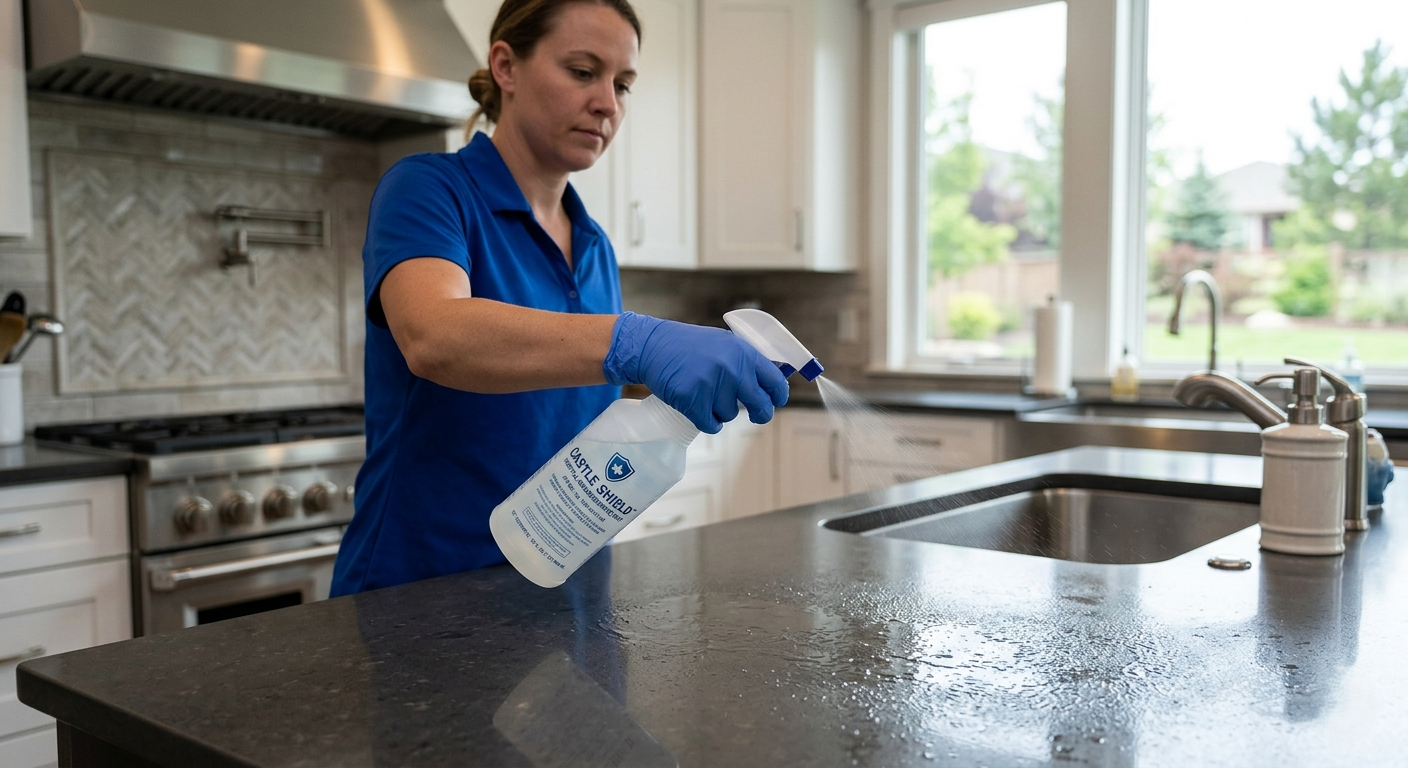
House cleaning vs disinfecting is one of the most confused topics in residential care, and Castle Pines households waste real money every year by booking the wrong one. This guide breaks down what separates the two services, when each one earns its place, and how to combine them so your home stays both visibly clean and genuinely safe.
House Cleaning vs Disinfecting in One Sentence
House cleaning removes what you can see (dirt, dust, crumbs, hair, and grime), while home disinfecting kills what you cannot see, which is the bacteria, viruses, and fungi living on surfaces. That single distinction is the reason the two services use different products, follow different protocols, take different amounts of time, and solve different problems.
Cleaning is a mechanical process. A cloth, a brush, or a vacuum physically lifts particles off a surface, and soap or detergent helps by breaking the bond between grime and the material underneath. Disinfecting is a chemical process. An EPA-registered product is applied to a surface, left to sit for a specific dwell time, and destroys microorganisms by breaking down their cell walls, membranes, or protein structures. Neither process substitutes for the other, and understanding why begins with what each one is actually doing.
How House Cleaning Works
House cleaning is the baseline service most Castle Pines households book weekly, biweekly, or monthly. It targets the visible layer of a home: the surfaces, floors, and fixtures where daily life leaves its marks.
A standard clean includes dusting horizontal surfaces, vacuuming carpets and rugs, mopping hard floors, wiping countertops and appliance exteriors, cleaning toilets and sinks, emptying trash, and making beds. The products used are general-purpose cleaners (dish soap, glass cleaner, multi-surface sprays, and vacuums). These products lift grease, dissolve sticky residue, and carry particles away, but they aren’t formulated to kill pathogens at a verified rate.
The word “clean” in the cleaning industry has a specific meaning: visibly free of dirt. A surface that looks clean can still host millions of microorganisms. This is not a failure of cleaning. It’s a definition. Cleaning was never meant to sterilize. It was meant to maintain a pleasant, lived-in home.
Most Castle Pines families book a recurring cleaning service for this baseline upkeep, because it handles the accumulation of daily life without the added cost and time of chemical disinfection on every visit.
How Home Disinfecting Works
Home disinfecting is a separate category of service with its own standards and its own products. The goal is not to make a surface look clean but to reduce the pathogens on it to a level considered safe for public health, typically a 99.9% or 99.999% kill rate, depending on the product and the target organism.
A disinfection visit starts with a walkthrough to identify high-touch surfaces. These are the 40 to 60 spots per kitchen or bathroom that transfer pathogens most efficiently: doorknobs, light switches, faucet handles, appliance pulls, remote controls, phones, and cabinet hardware. Each surface is first cleaned with a neutral detergent (because disinfectant cannot penetrate grease or food residue) and then sprayed or wiped with an EPA-registered product. The product must stay visibly wet for its labeled dwell time, usually 30 seconds to 10 minutes, before it is wiped or left to dry.
The products themselves are regulated differently than cleaning products. The EPA classifies disinfectants as antimicrobial pesticides, and every product must pass standardized laboratory testing against the pathogens it claims to kill. The EPA also maintains List N, a public database of disinfectants proven effective against specific viruses including SARS-CoV-2 and influenza. A trustworthy home disinfecting service uses products from this list and can cite the registration number on request.
Side-by-Side: Cleaning vs Disinfecting
The cleanest way to see the difference is to compare the two services directly across the dimensions that matter to a Castle Pines household.
| Dimension | House Cleaning | Home Disinfecting |
| Goal | Removes visible dirt and debris | Reduces invisible microorganisms |
| Products | Detergents, soaps, multi-surface sprays | EPA-registered antimicrobial pesticides |
| Regulation | No specific federal efficacy testing | Must pass EPA laboratory validation |
| Dwell time | Works as you wipe | 30 seconds to 10 minutes wet contact |
| Time per visit | 2–3 hours (3-bedroom home) | Adds 1–2 hours after cleaning |
| Frequency | Weekly or biweekly | Quarterly, or monthly during flu season |
| When you need it | Daily livability | Illness, renovations, newborns, immunocompromised |
| Cost structure | Priced by home size and frequency | Add-on or specialized visit |
Each line in this comparison is a decision point for homeowners trying to choose between the two services. Most Castle Pines households need both across the course of a year, but rarely at the same intensity on every visit.
Not sure which service your home needs right now? Get a free 5-minute consultation and we’ll walk through it with you, no commitment.
When House Cleaning Is the Right Call
House cleaning is the right service for the majority of weeks in a year. If your home is healthy, nobody is sick, and the goal is to maintain a pleasant, organized space, cleaning handles the job.
Specific scenarios where a standard clean is the correct choice include weekly or biweekly maintenance, general tidying before guests arrive, post-party cleanup, seasonal refreshes where the home simply needs attention, and recovery after a busy week when the dishes and laundry got ahead of you. These visits keep surfaces visually clean, remove allergens like dust and pet dander, and prevent the buildup that would eventually require a more intensive deep clean.
For Castle Pines homes with heavy foot traffic, pets, or young children, a recurring clean every one to two weeks is the usual cadence. For empty-nesters and single-resident homes, monthly is often enough. The rhythm is about visible order and breathable indoor air, not pathogen control.
When Home Disinfecting Is the Right Call
Disinfection earns its place during specific events, not as a weekly routine. Using it correctly means recognizing the triggers and booking the service within a narrow window after one of them occurs.
After illness in the household is the most common trigger. Flu, strep, RSV, norovirus, stomach bugs, and COVID all leave pathogens on surfaces for hours to days after symptoms end. Disinfecting within 48 hours of recovery reduces the chance of reinfection or spread to other family members.
During cold and flu season, which in Colorado runs roughly October through March (per the CDC’s seasonal flu guidance), monthly disinfection of high-touch surfaces cuts the baseline pathogen load in the home. Before a newborn arrives, or when an immunocompromised family member is moving in, disinfection creates a near-sterile starting point. After renovations is another strong trigger, because construction dust carries microbial contamination along with VOCs and debris; this service is often paired with post-construction cleaning.
Move-in and move-out situations fall into the same category, since the prior occupants’ microbial history is unknown and no amount of cleaning removes invisible contaminants on its own. CR Maids handles this through move-out cleaning paired with disinfection on request. Short-term rental turnovers between guests also qualify, and this is a regular category handled by our vacation rental cleaning service.
Why Cleaning Must Come Before Disinfecting
One of the least-understood rules in residential sanitation is the required order of operations. Disinfectant applied to a dirty surface does not work. The product binds to the organic debris (oils, food particles, skin cells, and dust) instead of reaching the pathogens underneath. The EPA label on most disinfectants explicitly instructs the user to clean the surface first.
This is why every professional disinfection visit begins with a full clean of the surface being treated. It’s not two separate services performed in sequence so much as a single layered process where the clean is the setup for the disinfect. A household that sprays disinfectant on a greasy kitchen counter and wipes it off 30 seconds later has neither cleaned nor disinfected the surface. The result is a costly illusion.
For this reason, the services complement each other rather than compete. Many Castle Pines clients booking disinfection after illness choose to pair it with a deep cleaning service so the entire house resets at once, not just the high-touch points.
High-Touch Surfaces: Where the Services Diverge Most
The surfaces that need disinfection are often not the same surfaces that dominate a standard clean. This is where the practical difference between the two services becomes most visible in a Castle Pines home.
A typical weekly cleaning visit focuses on large surface areas: floors, counters, dining tables, shower stalls, and toilets. These surfaces matter for visual cleanliness and allergen control, and they absorb the bulk of a cleaner’s time.
A disinfection visit focuses on small, frequently-touched surfaces. These are the 40 to 60 points per bathroom and kitchen where hands make contact multiple times a day, including faucet handles, light switches, cabinet pulls, appliance handles (refrigerator, oven, microwave, dishwasher), remote controls, game controllers, phone screens, tablet screens, thermostat panels, and the top edge of every door. In homes with pets, the list expands to leash hooks, food bin lids, interior doors leading to yards, and crate latches.
A standard clean touches some of these (wiping a light switch plate, cleaning a refrigerator handle), but it does not treat them with a dwell-time-governed product. This is the operational definition of the difference, and it’s why a visually immaculate home can still drive a family cycle of seasonal illness.
Can You Do Either Service Yourself?
Both services can be performed by homeowners, and most Castle Pines households handle a combination of DIY and professional visits across the year. The honest answer is that cleaning is easier to do well at home than disinfecting.
Cleaning requires time, attention, and a willingness to move furniture, but the products are forgiving and the feedback is visual. A surface either looks clean or it does not. Most homeowners who clean regularly develop a reliable personal standard, and a simple routine like the 20-minute rule in cleaning covers daily maintenance between professional visits.
Disinfecting is harder to do correctly at home because the feedback is invisible. You cannot see whether a product reached its full dwell time, whether cross-contamination occurred between rooms, or whether the concentration was right. The most common DIY mistakes (wiping off too early, mixing cleaners, using expired products, and reusing a single cloth across rooms) are the exact mistakes that make home disinfection unreliable.
This is why professional disinfection is the smarter service to hand off to professionals. You’re paying for protocol adherence, not just for someone else’s hands doing the work.
How the Two Services Fit Together Over a Year
The most effective approach for Castle Pines households is a layered schedule where cleaning runs as the baseline and disinfection is added at strategic intervals.
A representative annual pattern looks like this: biweekly house cleaning year-round, monthly disinfection during the October-to-March illness season, quarterly disinfection the rest of the year, and on-demand disinfection triggered by illness, guests, renovations, or life events like a newborn arrival. This rhythm keeps the baseline microbial load low, handles acute contamination events quickly, and keeps weekly visits focused and efficient.
The cost structure works in favor of this layered approach. A recurring clean is priced to be sustainable weekly or biweekly, while disinfection is priced as a higher-intensity specialty service used intermittently. Combining them costs less than booking full disinfection every visit, and it delivers better results than cleaning alone.
Serving Castle Pines Homes with Both Services
Castle Pines homes skew larger than the regional average, with more surface area to clean and more finish materials (quartz, natural stone, hardwood, wool carpet) that require product-surface compatibility. Both cleaning and disinfecting products need to be matched to the finishes in your home, or the service becomes a repair bill.
CR Maids has served the Castle Pines area alongside neighboring communities including Highlands Ranch, Lone Tree, and Parker, and our crews are trained on both standard cleaning protocols and the narrower disinfection protocols that require specific dwell times and EPA-registered products. You can book either service or a combination through our Castle Pines house cleaning page, and the team is background-checked and insured as a baseline, not an upgrade.
Closing Thoughts on Cleaning and Disinfecting
When weighing house cleaning vs disinfecting in a Castle Pines home, the question isn’t which one is better. It’s which one fits the moment. Cleaning is the rhythm of a well-kept home. Disinfection is the intervention that protects that home during the predictable health events a family encounters over a year. Both matter. Neither substitutes for the other. The households that get this right are not cleaning more often. They are cleaning smarter, and knowing when to add the second layer.
Book a Cleaning or Disinfecting Visit in Castle Pines
Ready to put the right service on the calendar? Schedule a standard clean, a disinfection visit, or a combined appointment through our booking page, reach out via contact, or call 720-713-1920 to discuss which combination fits your household best. Visit CR Maids to see the full service menu.
Frequently Asked Questions
1. Can I book house cleaning vs disinfecting in the same visit, or are they always separate?
Yes, and it is one of the most common requests from Castle Pines clients. A combined visit typically runs three to five hours for a three-bedroom home, covering a full clean followed by disinfection of all high-touch surfaces. This is the preferred approach after illness, before a newborn arrives, or during post-renovation resets.
2. How often should Castle Pines homes be disinfected versus cleaned?
Most households book cleaning every one to two weeks and disinfection every 30 to 90 days. During Colorado’s October-to-March illness season, monthly disinfection is common. Between April and September, quarterly disinfection is typical unless a specific event (illness, guests, renovation) triggers an earlier visit.
3. Does disinfecting replace the need for deep cleaning?
No. Deep cleaning addresses built-up grime in neglected areas such as baseboards, behind appliances, inside the oven, and under furniture. Disinfection addresses microorganisms on accessible surfaces. The two services solve different problems, and homes typically need deep cleaning every six to twelve months alongside their disinfection rhythm.
4. Are cleaning products and disinfectants interchangeable?
No. Cleaning products are formulated to lift dirt and are not tested for pathogen kill rates. EPA-registered disinfectants are antimicrobial pesticides tested against specific organisms. Some products are labeled as both cleaner and disinfectant, but they only perform the disinfection function when applied according to the label’s dwell time and concentration instructions.
5. Is disinfecting necessary if I clean my home every week?
Cleaning every week is excellent for allergen control and daily livability, but it does not reduce pathogens to the levels disinfection achieves. For healthy households with no immunocompromised members, quarterly disinfection is usually enough. For families with young children, pets, or seasonal illness exposure, monthly disinfection during flu season adds meaningful protection.
6. Which service is more expensive, cleaning or disinfecting?
Disinfecting is typically priced higher per visit than standard cleaning because it requires additional time, specialized products, and strict protocol adherence. The cost gap narrows when the two are combined in a single visit, since the cleaning phase is already part of the disinfection protocol. Specific pricing depends on home size and frequency.
Key Takeaways
- Cleaning removes visible dirt using detergents. Disinfecting kills bacteria and viruses using EPA-registered products with 30-second to 10-minute dwell times. The two services solve different problems.
- Cleaning products face no federal efficacy testing, while disinfectants are regulated as antimicrobial pesticides and must appear on the EPA’s List N to claim effectiveness against specific pathogens.
- Disinfection requires cleaning first, because EPA-registered products bind to organic debris instead of reaching pathogens underneath. Skipping the clean step voids the disinfectant’s effectiveness.
- A typical Castle Pines bathroom or kitchen has 40 to 60 high-touch surfaces (faucet handles, light switches, appliance pulls) that disinfection targets, most of which standard cleaning touches only lightly.
- An effective annual rhythm combines biweekly cleaning with monthly disinfection during October-to-March flu season and quarterly disinfection the rest of the year, plus on-demand visits after illness or renovation.
- Disinfection is harder to do correctly at home than cleaning because its feedback is invisible. The most common DIY mistakes (short dwell time, mixed chemicals, expired products, reused cloths) make it the higher-leverage service to outsource.

Karina Cohen is the owner of CR Maids, a local cleaning company serving the Greater Denver area. With a background as a global executive in fashion, software, retail, and financial services, she has led business strategy, mergers and acquisitions, and cross-cultural teams across the US, Europe, and Asia.
Karina holds a Global Executive MBA from Duke University’s Fuqua School of Business and a Bachelor of Science in Finance and Marketing from Fordham University. She brings this strategic expertise into CR Maids, where her mission goes beyond spotless homes—she is committed to empowering her team, creating financial security, and giving back to the community.
When she’s not leading CR Maids, Karina homeschools her daughter, serves on the board of Duke University Colorado, and supports initiatives that strengthen families and small businesses.