
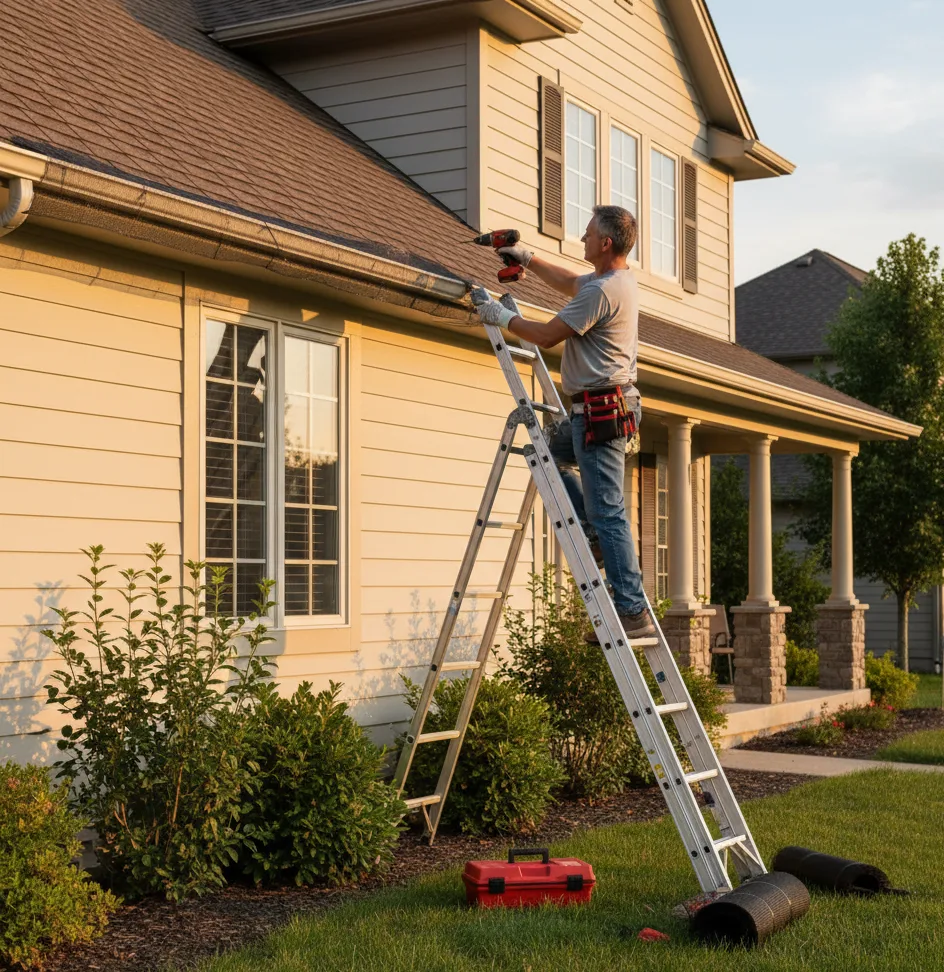
Installing gutter guards can dramatically reduce how often you need to climb the ladder and clear blockages. This guide walks you through what they are, how to pick them, how to install them safely and correctly, common pitfalls, and expert tips so your gutter guard investment really pays off.
How to Install Gutter Guards? A Step-by-Step Guide for Homeowners
Your gutters are a silent but vital part of your home’s defense against water damage. But when they’re clogged by leaves, debris, or ice, they fail. For many homeowners, especially busy professionals and families in Castle Rock, CO, the idea of how to install gutter guards is attractive: less maintenance, fewer ladder trips, more peace of mind.
In this post, you’ll get a clear, trustworthy, and practical walkthrough of how to install gutter guards properly including how to choose the right style, how to do it yourself (if feasible), when to use a pro, and how to avoid costly mistakes.
(As a side note, we at CR Maids focus on interior maintenance and cleaning, but we often see the downstream problems from poor exterior upkeep. A well-installed gutter protection system complements our work by reducing risks of moisture infiltration, wood rot, or foundation issues.)
What Are Gutter Guards?
“Gutter guards” (also sometimes called gutter covers, screens, leaf guards, or gutter protection systems) are devices installed over or inside your existing gutters that let water flow through while keeping out leaves, twigs, seeds, pine needles, and other debris.
They range in type (mesh, foam, brush, surface tension, micro‑mesh, etc.), each with trade‑offs in cost, performance, ease of installation, and maintenance. The key goal: reduce clogging and move water away safely from your home.
Why Installing Gutter Guards Matters
- Reduce gutter cleaning frequency. Many homeowners spend hours twice a year climbing ladders to scoop leaves, sludge, and pests. A good guard can cut that work by 70–90%.
- Protect your roof, fascia, and foundation. Overflowing gutters can spill water behind siding, soak into attic spaces, rot fascia boards, or erode soil near your foundation.
- Prevent pest and insect issues. Blocked gutters can become breeding grounds for mosquitoes or attract birds, rodents, or insects.
- Extend gutter life. Guards help prevent standing water and debris buildup that accelerate rust, corrosion, or physical stress on gutters.
- Peace of mind. For families, older residents, or those with mobility issues, gutter guards reduce risky ladder work.
Of course, they’re not magic, you’ll still want occasional checks and minor cleaning, especially after storms.
Benefits, Features & Types of Gutter Guards
Below are common types with pros, cons, typical lifespan, and ease of install. Use this to choose the right style for your home before you install.
Mesh / Metal Screen Guards
Fine to coarse metal mesh (aluminum, galvanized, stainless) mounted over the gutter opening.
- Pros: Durable, good balance of cost and function, relatively long lifespan.
- Cons: Very fine debris (roof grit, shingle dust) may accumulate under the mesh over time.
- Lifespan: 10–20 years under good conditions
- Installation: Moderate; some models clip in, others need screws or brackets.
Micro‑Mesh / Micro‑Screen Guards
A finer mesh that blocks even small particles (e.g. pine needles, sand).
- Pros: Excellent filtration, great for homes near pine trees or with fine debris.
- Cons: More expensive; if not installed precisely, can trap small grit.
- Lifespan: 10–20 years or more
- Installation: Often requires careful fit, sometimes professional help.
Brush / Bottle Brush Guards
Cylindrical brush rods (like bottle brushes) placed inside gutters. Debris sits on bristles; water flows past.
- Pros: Very DIY-friendly; simple to cut to length.
- Cons: Fine particles can accumulate between bristles; may require periodic removal and cleaning.
- Lifespan: 5–10 years
Foam or Sponge Inserts
Dense foam pieces that sit inside the gutter channel and let water through while blocking debris.
- Pros: Easiest DIY; minimal tools needed.
- Cons: Less durable; can degrade, trap mold, or feed weeds over time. Best for lighter debris environments.
- Lifespan: 2–5 years in many climates
Surface Tension / Reverse‑Curve / Helmet Guards
A solid or curved cover attached above the gutter that uses water’s surface tension to draw water in while deflecting leaves or debris off the edge.
- Pros: Very low maintenance when properly installed; great for heavy leaf zones.
- Cons: Usually more expensive; requires precise installation (often best done by pros).
- Lifespan: 10–20 years or more
Step‑by‑Step: How to Install Gutter Guards Effectively, DIY & Pro Tips
Installing gutter guards is a manageable DIY task if done safely and correctly. Always follow your product’s instructions and prioritize ladder safety.
Tools & Materials
- Gutter guard sections
- Measuring tape, chalk line
- Tin snips or utility knife
- Drill or screwdriver
- Screws/clips, sealant (if needed)
- Ladder with stabilizer
- Gloves and safety glasses
Step 1: Clean the Gutters: Remove all debris, flush out downspouts, and repair any damage before starting.
Step 2: Measure & Mark: Measure your gutter length and mark guide lines for even placement.
Step 3: Slide Guard Under Shingles or Drip Edge: Carefully lift shingles (if required) and slide the back edge of the guard beneath for a snug fit.
Step 4: Secure Guards: Use clips or screws to fasten guards to the gutter. Don’t overtighten.
Step 5: Overlap Sections: Overlap each piece by 2–4 inches to block gaps and maintain strength.
Step 6: Water Test: Run water over the roof to check for proper flow into the gutter.
Step 7: Trim & Finish: Cut to fit corners or ends and seal any gaps if needed.
Quick Tips
- Work in short sections for better control
- Use a ladder stabilizer for safety
- Avoid placing guards over sagging or misaligned gutters
- Consider hiring a pro for multi-story homes or steep roofs
Done right, this simple install can save you hours of seasonal cleanup.
How to Install Gutter Guards the Right Way
Installing gutter guards is one of the smartest long-term moves you can make to protect your home from water damage and reduce time spent on seasonal maintenance. By understanding the different types of gutter guards, following a clear installation process, and avoiding common pitfalls, you can extend the life of your gutters and improve your home’s overall resilience especially in a climate like Castle Rock, CO. Whether you’re a DIYer or prefer to hire a professional, taking the time to do it right ensures your investment pays off. And remember, keeping your exterior in shape supports everything inside your home, something we at CR Maids see every day.
Ready for a Cleaner, Safer Home Exterior?
If you’d like a professional inspection of your gutters or help selecting and installing the right gutter guards or if you later want your exterior surfaces cleaned to complement your new system CR Maids would be happy to assist. Let us help you maintain the inside and outside of your home in harmony, so you can focus on what really matters.
Frequently Asked Questions
1. How much does gutter guard installation cost?
Gutter guard installation usually runs between about $7 and $15 per linear foot depending on material, roof height, complexity, and labor; for a typical mid‑sized home the total often falls in the range of $1,200 to $2,500.
2. What are the best gutter guards?
The best gutter guards tend to be stainless steel micro‑mesh or premium aluminum designs, from reputable brands like LeafFilter, Gutter Helmet, or MasterShield that balance durability, debris filtration, and warranty support.
3. Do gutter guards really work?
Yes, gutter guards are effective at reducing debris entry into gutters, which leads to fewer clogs and less frequent cleaning; however they are not perfect and still require periodic inspection and maintenance.
4. How often should I inspect or clean gutter guards?
Generally, twice a year (spring, fall) is wise. After heavy storms, check for debris. Micro-mesh systems may require more attention if you have fine dust or grit.
5. What is the proper way to install gutter guards?
The proper way to install gutter guards is to first clean and inspect your gutters, then measure and cut the guards to fit. Slide the guard’s back edge under the shingles or drip edge, secure it firmly to the gutter with clips or screws, overlap sections properly, and finish by testing water flow to ensure it drains correctly.
Key Takeaways
- Gutter guards help prevent debris from clogging gutters, reducing maintenance and water damage risk.
- There are several types (mesh, micro‑mesh, brush, foam, surface tension), each with trade‑offs in cost, lifespan, and installation complexity.
- A proper installation involves cleaning gutters first, careful fitting (often under shingles), secure mounting, overlaps, and testing water flow.
- Common mistakes include misalignment, faulty overlaps, ignoring gutter condition, or choosing the wrong style for your environment.
- Costs vary widely: expect $3 to $25 per linear foot for professional installation, depending on material and roof complexity.
- Gutter guards do work but they are not “set and forget.” Annual or semiannual inspection is still wise.