
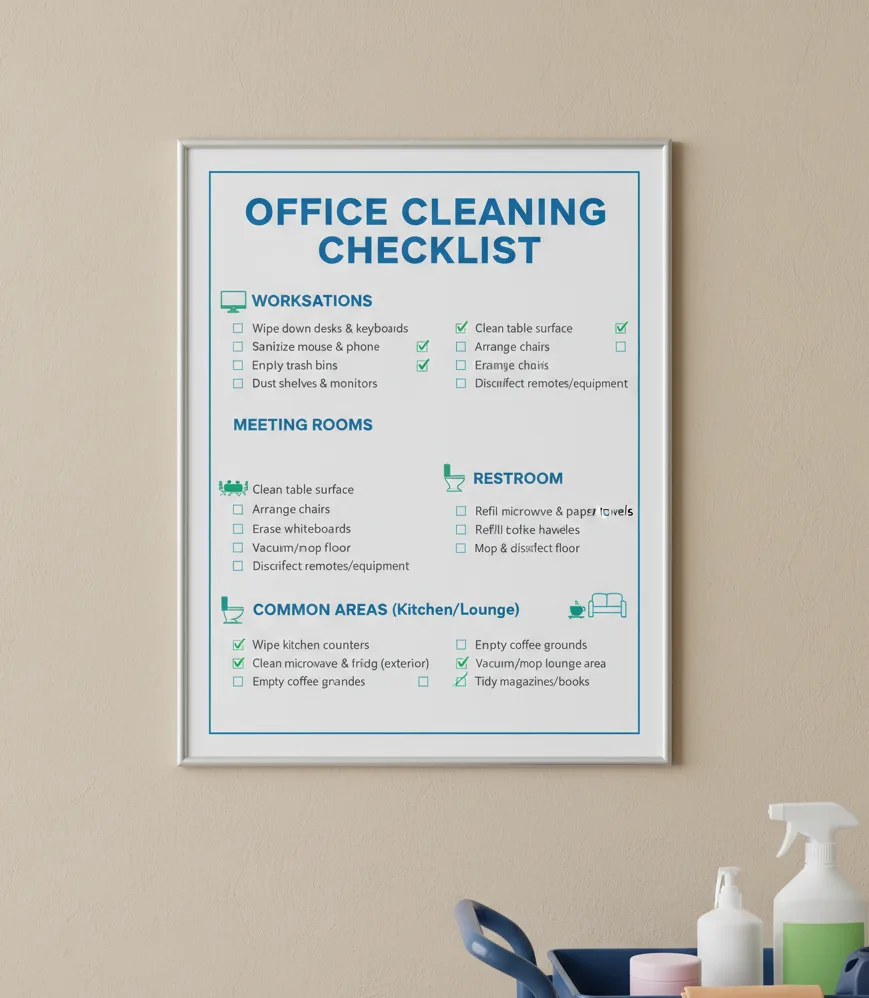
Maintaining a clean office boosts productivity, promotes health, and creates a welcoming environment for staff and visitors. An effective office cleaning checklist ensures nothing is overlooked from desks to restrooms. CR Maids shares expert insights for comprehensive office cleaning planning.
What Should Be Included in an Office Cleaning Checklist
A clean office isn’t just about appearances. Studies show that workplace cleanliness directly affects employee productivity, mental well-being, and even the number of sick days taken. Understanding what should be included in an office cleaning checklist helps ensure every workspace stays organized, hygienic, and inviting. With a detailed office cleaning checklist, you can maintain a healthier environment and boost team morale.
- Maintain hygiene and prevent the spread of germs.
- Ensure a professional environment for clients and visitors.
- Streamline cleaning tasks for staff or janitorial services.
- Track routine maintenance and avoid costly repairs.
Even small businesses or startups can benefit by implementing structured cleaning protocols, especially if you operate in shared workspaces or coworking offices.
Quick Stat: According to the International Sanitary Supply Association, offices with structured cleaning schedules experience up to 25% fewer workplace-related illnesses.
How to Make an Office Cleaning Checklist
Creating a checklist may seem straightforward, but the most effective lists are comprehensive and categorised. Follow these steps:
Step 1: Categorise Areas
Break your office into key zones:
- Workstations & Desks: Individual desks, keyboards, phones, chairs.
- Common Areas: Lounges, kitchens, meeting rooms, reception areas.
- Restrooms & Washrooms: Toilets, sinks, mirrors, floors (bathroom deep cleaning).
- Floors & Carpets: Hard floors, carpets, rugs (deep cleaning service).
- Windows & Glass Surfaces: Internal and external windows, glass doors, partitions (window cleaning).
- Electronics & Appliances: Printers, copiers, microwaves, fridges (apartment cleaning).
Step 2: List Tasks for Each Zone
Each area should have specific, actionable tasks. For example:
Desks & Workstations
- Dust and wipe all surfaces.
- Sanitize keyboards, mice, and phones.
- Empty bins and replace liners (recurring cleaning).
Meeting Rooms
- Wipe down tables and chairs.
- Clean screens, projectors, and whiteboards.
- Restock stationery if needed.
Restrooms
- Disinfect toilets, sinks, and handles.
- Refill soap, hand sanitiser, and paper towels.
- Mop floors and check for leaks or maintenance issues.
Floors
- Vacuum carpets and rugs (deep house cleaning).
- Sweep and mop hard floors.
- Spot-clean stains promptly.
Windows & Glass
- Wipe smudges from windows, glass doors, and partitions.
- Dust window sills and blinds (gutter cleaning).
Appliances & Electronics
- Clean exterior surfaces and control panels.
- Remove crumbs and spills from microwaves or refrigerators.
- Check printers and other shared electronics for dust (home disinfecting).
Pro Tip: Include frequency for each task daily, weekly, or monthly to make your checklist actionable.
Typical Office Cleaning Tasks and Frequency
Here’s a sample frequency guide for your checklist:
| Task | Frequency | Notes |
| Empty bins | Daily | Replace liners |
| Dust surfaces | Weekly | Includes shelves & ledges |
| Mop floors | Daily | Use disinfectant in high-traffic areas |
| Clean restrooms | Daily | Deep clean weekly |
| Windows & glass | Monthly | More often in public areas |
| Kitchen appliances | Weekly | Daily wipe-down of high-use items |
| Electronics | Weekly | Use approved cleaning products |
This structure can also form the basis for your janitorial checklist or a broader commercial cleaning checklist.
Why Is an Office Cleaning Checklist Important?
- Consistency: Ensures cleaning tasks are completed regularly and thoroughly.
- Accountability: Cleaning teams know exactly what is expected (our team).
- Health & Safety: Reduces germs, allergens, and the risk of accidents.
- Efficiency: Saves time by preventing missed tasks or redundant efforts.
An office cleaning checklist also supports compliance with workplace hygiene standards, especially in shared environments.
How Often Should Office Cleaning Tasks Be Done?
Frequency depends on office size, number of staff, and the nature of your work.
- Daily: Empty bins, clean restrooms, wipe high-touch surfaces, mop floors in high-traffic areas.
- Weekly: Dust desks and shelves, vacuum carpets, wipe electronics, clean kitchen appliances.
- Monthly: Clean windows, deep-clean carpets, check for maintenance issues.
- Quarterly / Annually: Professional deep cleaning, air duct, and upholstery cleaning.
Quick Stat: Offices with daily cleaning of high-touch areas see a 30–40% reduction in cold and flu transmission.
Office Cleaning Checklist: Best Practices
- Use Labels and Categories: Group tasks by area and urgency.
- Prioritise High-Touch Surfaces: Door handles, phones, light switches.
- Include Safety Checks: Ensure cords aren’t tripping hazards, check fire exits are clear.
- Track Completion: Use a digital checklist or sign-off sheet.
- Train Staff: Make sure everyone understands proper cleaning methods.
Story Insight: A Sydney startup saw employee satisfaction rise after implementing a structured cleaning plan, boosting client impressions too.
What Should Be Included in an Office Cleaning Checklist
An effective office cleaning checklist is more than just a list it’s a roadmap to a healthier, more productive workspace. Whether you manage a startup, coworking space, or large commercial office, a structured plan ensures nothing is overlooked.
At CR Maids, we’ve helped numerous businesses across American develop and implement detailed cleaning checklists that improve hygiene, safety, and satisfaction. By understanding what should be included in an office cleaning checklist, you can create a cleaner, more organized environment without adding stress to your team.
Get Your Custom Office Cleaning Checklist Today
Keep your office spotless and your team healthy with a professional cleaning routine. At CR Maids, we help businesses across American implement customised office cleaning checklists and schedules tailored to your workspace.
Book your cleaning today or contact us to streamline your cleaning process and ensure a consistently clean, productive environment.
Frequently Asked Questions
1. How to make an office cleaning checklist?
To make an office cleaning checklist, list all areas and surfaces that need cleaning, categorize tasks by frequency, assign responsibilities, and include safety or hygiene notes.
2. Why is an office cleaning checklist important?
An office cleaning checklist is important because it ensures a consistent, organized, and hygienic workspace, reduces missed tasks, and improves employee health and productivity.
3. How often should office cleaning tasks be done?
Office cleaning tasks should be done according to their type, with daily tasks for high-traffic areas, weekly for deeper cleaning, and monthly for less frequently used spaces.
4. Can small offices use a cleaning checklist effectively?
Absolutely. Even a compact checklist improves hygiene, efficiency, and staff accountability in smaller teams.
5. What’s the difference between a janitorial services checklist and a commercial cleaning checklist?
A janitorial services checklist is usually for in-house or contracted cleaning staff focusing on routine tasks. A commercial cleaning checklist may include deeper, specialised cleaning suitable for large offices or public spaces.
Key Takeaways
- Categorise your office into zones for clarity.
- Include specific tasks with assigned frequency (daily, weekly, monthly).
- Prioritise high-touch surfaces to reduce illness.
- Track completion for accountability and efficiency.
- A structured checklist improves workplace hygiene, productivity, and client impressions.