
Daily tasks pile up and most households fall behind no matter the intentions. Homeowners spending weekends on chores need a fixed schedule, not more willpower. This post explains what is a chore helper, what the role covers, and how it differs from a house cleaner.
What Is a Chore Helper and Why the Role Exists
A chore helper is a home support professional who handles the recurring daily and weekly household tasks that accumulate when occupants do not have time to stay on top of them. The role exists because there is a gap in the home services market between a one-time deep clean and full-time household management.
Most residential cleaning services focus on periodic deep cleaning: scrubbing bathrooms, cleaning inside appliances, washing windows, and addressing the buildup that accumulates over weeks or months. That service is valuable, but it does not address the daily friction tasks that generate mess every single day regardless of how recently the home was deep cleaned.
A chore helper fills that gap. The chore helper service is scoped specifically to the tasks that need doing every day or every week, not the tasks that need doing every month.
What a Chore Helper Actually Does
The scope of a chore helper visit is task-based rather than room-based. A house cleaner moves through the home room by room addressing surfaces and fixtures. A chore helper works through a list of recurring tasks that the household agrees on before the first visit.
Standard tasks within a chore helper scope:
- Laundry: Washing, drying, folding, and putting clothes, towels, and linens away. The full cycle, not just moving a load from the washer to the dryer.
- Dishes and kitchen cleanup: Loading and unloading the dishwasher, handwashing items that do not go in the machine, wiping countertops, and clearing the sink.
- Tidying and organizing: Returning items to their correct place, clearing flat surfaces in living areas, entryways, and home offices.
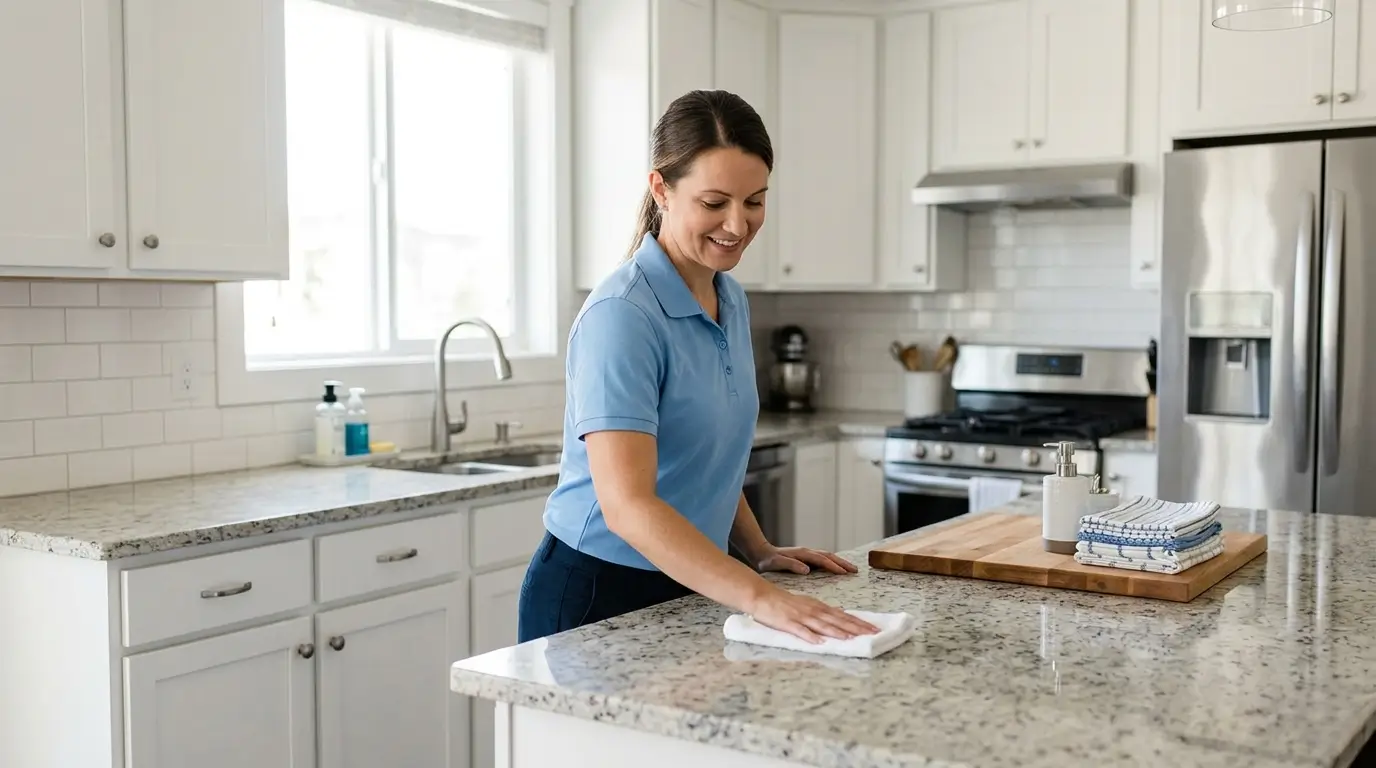
- Light surface wiping: Wiping down counters, appliance exteriors, tables, and bathroom vanities to maintain cleanliness between deep clean visits.
- Trash and recycling: Emptying bins throughout the home, replacing liners, and moving full bags to the collection point.
- General pickup: Straightening cushions, resetting rooms to a baseline state, and collecting items left in the wrong place.
The task list is agreed before the first visit and adjusted as household needs change. The visit length is set based on the scope, typically two to three hours for a standard weekly visit in a Castle Pines household.
How a Chore Helper Differs From a House Cleaner
The distinction matters for budgeting and scheduling decisions. The two roles address different problems:
- House cleaner: Addresses buildup in areas that accumulate grime over weeks, including inside appliances, grout lines, baseboards, window tracks, and hard-to-reach surfaces. Scheduled monthly or quarterly for most households.
- Chore helper: Addresses the daily and weekly tasks that generate mess continuously regardless of when the last deep clean happened. Scheduled weekly or twice-weekly for most households.
A deep cleaning service and a chore helper work best together. The deep clean handles what a chore helper does not reach. The chore helper keeps the home at a consistent baseline between deep cleans so the mess does not compound.
What a Chore Helper Does Not Do
Being clear about scope prevents mismatched expectations. A chore helper does not:
- Clean inside appliances: Oven interiors, refrigerator shelves, and microwave cavities are outside chore helper scope.
- Wash windows: Interior and exterior window cleaning is a separate service.
- Shampoo or steam clean carpets: Deep carpet treatment requires specialist equipment and booking.
- Clean garages or outdoor areas: Chore helper visits are scoped to interior living spaces.
- Perform post-construction cleanup: Renovation debris and drywall dust require specialist cleaning beyond chore helper scope.
Any task outside the agreed list should be discussed before the visit, not added during it. Scope creep affects visit timing and quality for every other task on the list.
Who Benefits Most From a Chore Helper
Understanding what is a chore helper also means understanding who the service is designed for. The role delivers the most value to:
- Dual-income households: When both occupants work full schedules, daily chore management falls behind quickly. A chore helper absorbs the volume before it becomes a weekend project.
- Parents with young children: Laundry and dish volume in homes with children under ten exceeds what most parents can keep up with alongside work and childcare commitments.
- Home-based workers: Working from home generates more daily mess in kitchens, living areas, and home offices. A midweek helper visit resets the environment for the second half of the week.
- Older adults: Physical difficulty with bending, lifting, and repetitive tasks makes regular helper visits a practical support solution rather than a luxury.
The MedlinePlus research on stress and daily task load consistently identifies the cognitive burden of tracking undone household tasks as a significant contributor to chronic stress in working adults. A chore helper removes that tracking burden for the tasks within its scope.
How Often a Chore Helper Visits
Scheduling frequency depends on household size, the number of occupants, and the daily chore volume the household generates:
- Weekly: The most common schedule for Castle Pines households. One visit handles laundry, dishes, tidying, and light surface work within a standard two to three hour window.
- Twice weekly: Better for households with children, pets, or high daily chore volume. Keeps laundry and dishes managed continuously without backlog forming between visits.
- Every two weeks: Suitable for smaller households or single occupants with lower daily task volume. Works best when paired with a monthly recurring cleaning visit.
The residential cleaning pricing page provides current rates for chore helper visits by frequency and scope.
What Indoor Air Quality Has to Do With It
Regular chore helper visits contribute to indoor air quality in ways that are easy to overlook. The EPA’s indoor air quality guidelines identify dust, pet dander, and volatile organic compounds from household products as the primary contributors to poor indoor air in residential settings.
Consistent surface wiping and general tidying between deep cleans reduces the organic material that contributes to airborne particulates. Castle Pines homes at Front Range elevation accumulate dust faster than lower-altitude properties due to lower humidity and higher HVAC air circulation. A weekly helper visit reduces that accumulation before it reaches levels that affect air quality for occupants with allergies or respiratory sensitivities.
CR Maids provides chore helper services in Castle Pines and surrounding communities including Highlands Ranch and Parker. Every visit follows an agreed task list and consistent schedule. Book through the CR Maids booking page.
What is a chore helper: the answer that changes how you manage your home
What is a chore helper comes down to one thing: a professional who handles the tasks that never stop generating so you do not have to. The service is not about cleaning the house once. It is about keeping it at a manageable baseline every week without the household having to track, schedule, or complete those tasks themselves.
Book Your Chore Helper Visit
CR Maids provides chore helper services across Castle Pines and the Denver metro area. Every visit includes an agreed task list and consistent scheduling. Book your visit here.
Frequently Asked Questions
1. What is a chore helper and how is it different from a cleaner?
A chore helper handles recurring daily tasks like laundry, dishes, and tidying on a scheduled basis, while a house cleaner focuses on periodic deep cleaning of surfaces, appliances, and hard-to-reach areas.
2. What tasks does a chore helper do on each visit?
A chore helper completes an agreed task list that typically includes laundry, dishes, kitchen cleanup, tidying, light surface wiping, and trash removal within a set visit window.
3. How often should I book a chore helper?
Weekly works for most households, twice-weekly suits homes with children or pets, and every two weeks is sufficient for smaller households with lower daily chore volume.
4. Can I change the task list after the first visit?
Yes, the task list is reviewed and adjusted as household needs change, with CR Maids scheduling the appropriate visit length to match the updated scope.
5. Does a chore helper bring their own supplies?
CR Maids can supply cleaning products or use household-provided products based on client preference, with specific sensitivities and product requirements documented before the first visit.
Key Takeaways
- What a chore helper is: A home support professional who handles recurring daily and weekly tasks on a consistent schedule.
- Core tasks: Laundry, dishes, tidying, light surface wiping, trash removal, and general pickup.
- How it differs from a house cleaner: Chore helpers cover daily task volume; house cleaners address periodic deep cleaning of buildup areas.
- Best scheduling frequency: Weekly for most households, twice-weekly for high-volume homes.
- Who benefits most: Dual-income households, parents with young children, home-based workers, and older adults managing physical limitations.

Karina Cohen is the owner of CR Maids, a local cleaning company serving the Greater Denver area. With a background as a global executive in fashion, software, retail, and financial services, she has led business strategy, mergers and acquisitions, and cross-cultural teams across the US, Europe, and Asia.
Karina holds a Global Executive MBA from Duke University’s Fuqua School of Business and a Bachelor of Science in Finance and Marketing from Fordham University. She brings this strategic expertise into CR Maids, where her mission goes beyond spotless homes—she is committed to empowering her team, creating financial security, and giving back to the community.
When she’s not leading CR Maids, Karina homeschools her daughter, serves on the board of Duke University Colorado, and supports initiatives that strengthen families and small businesses.