
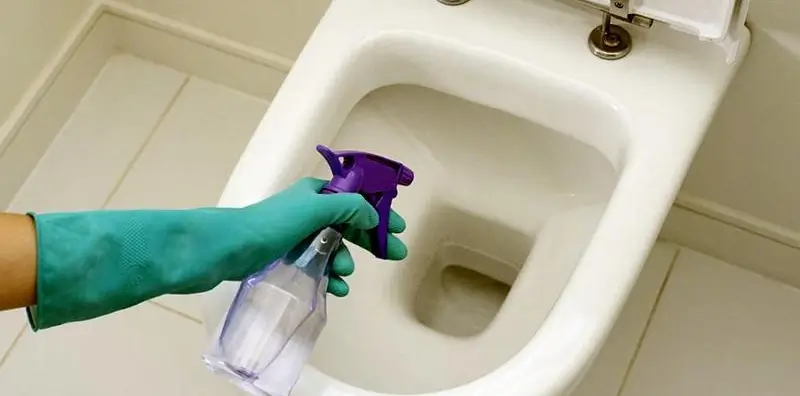
Cleaning rust off a toilet bowl is most effectively done with white vinegar, baking soda, or a commercial oxalic acid-based cleaner applied directly to the stain and left to sit for 30 to 60 minutes before scrubbing. Mild rust stains typically respond to household remedies. Embedded or recurring rust stains usually point to a plumbing issue that also needs addressing.
Key Takeaways
- Best for Light Stains: White vinegar or a baking soda paste applied for 30 to 60 minutes removes surface-level rust effectively.
- Best for Deep Stains: Oxalic acid-based cleaners or commercial rust removers dissolve embedded rust that household products cannot reach.
- Root Cause Matters: Rust that keeps returning is usually caused by iron-rich water or corroding pipes, not a cleaning frequency problem.
- Avoid Abrasives on Porcelain: Scouring powders and steel wool scratch the bowl surface and create more places for rust to grip.
- Safety First: Acidic cleaners irritate skin and eyes. Always wear rubber gloves and keep the bathroom ventilated before applying.
- Professional Cleaning: CR Maids handles deep bathroom sanitizing and bathroom detailing across Castle Rock, Denver, Parker, and Highlands Ranch.
What Causes Rust Stains in a Toilet Bowl?
Knowing what causes rust helps you choose the right removal method and prevent stains from coming back.
Primary Causes:
- Iron-Rich Water: High iron concentrations in tap water leave orange deposits on toilet surfaces. The iron oxidizes on contact with air and water, producing rust-colored staining.
- Corroding Steel Pipes: Older ungalvanized steel pipes release iron particles into the water supply. These settle in the bowl and cistern and gradually build into visible stains.
- Leaking Cistern: A slow drip runs continuously down the bowl, concentrating dissolved minerals into rust streaks. Repair the leak before cleaning or the stain returns within days.
- Rough Bowl Surfaces: Older porcelain develops microscopic texture over time. Rust particles cling to rough surfaces more readily, which is why older toilets rust more visibly than new ones.
How to Clean Light Rust Stains Off a Toilet Bowl?
Light rust stains that have not been sitting for weeks typically respond to safe household methods without the need for specialist products.
Method 1: White Vinegar
- Pour one to two cups of white vinegar directly into the toilet bowl.
- Let it sit for 30 to 60 minutes without flushing.
- Scrub the stained area with a toilet brush using firm circular strokes.
- Flush to rinse.
White vinegar works because its acidity dissolves iron oxide at the surface level. It is safe for porcelain and non-toxic.
Method 2: Baking Soda and Vinegar
- Pour one cup of baking soda into the bowl.
- Follow with one cup of white vinegar.
- Allow the fizzing reaction to work for 20 to 30 minutes.
- Scrub and flush.
The combination creates a mild cleaning action effective for recent or light staining and is safe for households with children or pets. CR Maids uses this approach as part of eco-friendly house cleaning where non-toxic alternatives are preferred.
Method 3: Lemon Juice and Borax
- Apply borax powder to the rust-stained area of the bowl.
- Squeeze lemon juice over the borax to create a paste.
- Leave for 30 to 60 minutes.
- Scrub and flush.
This method works well for rust staining around the waterline and bowl base.
How to Clean Deep or Embedded Rust Stains Off a Toilet Bowl
Rust stains that have been building up for weeks or months require stronger products with longer dwell time.
Method 1: Oxalic Acid Cleaners
Oxalic acid is one of the most effective compounds for dissolving iron oxide from ceramic surfaces.
- Apply an oxalic acid-based cleaner (sold under brand names like Bar Keepers Friend or Zud) to the stained area.
- Allow to sit for 30 to 60 minutes.
- Scrub with a toilet brush and flush.
Keep the bathroom ventilated and wear rubber gloves. Oxalic acid is effective on porcelain and ceramic but should not be used on enameled surfaces.
Method 2: Hydrogen Peroxide and Baking Soda
- Apply baking soda to the rust stain to coat it.
- Spray or pour hydrogen peroxide (3 percent concentration) over the baking soda.
- Allow to sit for 30 minutes.
- Scrub and flush.
This method works well on moderate staining. Per the EPA Safer Choice program, hydrogen peroxide-based cleaning formulas meet certified safety standards for household use.
Method 3: Commercial Rust Remover
For severe staining that does not respond to household methods, commercial toilet rust removers are available at most hardware stores. Follow the manufacturer’s instructions and always wear protective gloves.
According to the CDC’s household hygiene guidance, regular disinfection of toilet surfaces reduces bacterial load. Combining rust removal with disinfection leaves the bowl both stain-free and hygienically clean.
What to Avoid When Cleaning Rust Off a Toilet Bowl
Certain approaches damage porcelain and make future staining worse.
Products and Methods to Avoid:
- Steel Wool or Metal Scrubbers: Scratch the bowl surface and create grooves where rust grips more easily on future visits.
- Bleach on Rust Stains: Bleach does not dissolve rust and can set stains more permanently by further oxidizing the iron.
- Highly Abrasive Powders: Repeated use degrades the smooth porcelain surface finish over time.
- Mixing Acidic and Ammonia-Based Cleaners: Creates toxic fumes. Never mix cleaning chemicals.
How to Prevent Rust Stains from Returning
Once the bowl is clean, these steps reduce the rate at which rust stains reappear.
Prevention Steps:
- Address the Water Source: If iron-rich water is the cause, a water softener or iron filter on the main supply line is the most effective long-term fix.
- Fix Cistern Leaks Immediately: A leaking flap valve is inexpensive to replace and stops the concentrated rust streaks that form from a continuous slow drip.
- Clean Regularly: Weekly maintenance with a non-abrasive toilet cleaner prevents iron deposits from building to stain level.
- Consider Pipe Replacement: Homes with older ungalvanized steel pipes benefit from upgrading to polypropylene or cross-linked polyethylene piping, which does not corrode.
- Use Cistern Tablets Appropriately: Rust-prevention cistern tablets reduce iron oxidation in the bowl for lighter cases but do not solve a pipe corrosion problem.
The Bottom Line on Cleaning Rust Off a Toilet Bowl
White vinegar handles light rust. Oxalic acid or commercial rust removers handle deep staining. Bleach and abrasive scrubbers make the problem worse. If rust keeps returning after cleaning, the cause is in the water supply or the pipes and fixing the source is the only permanent solution.
Let CR Maids Handle the Deep Bathroom Clean
For homeowners who want a professional team to handle bathroom detailing, CR Maids provides deep cleaning across Castle Rock, Parker, Highlands Ranch, Centennial, and Denver with all supplies included. A recurring cleaning plan keeps bathrooms maintained between deep cleans so buildup never becomes a stubborn stain.
Book your bathroom deep clean today or call 720-713-1920.
Frequently Asked Questions
1. What is the fastest way to clean rust off a toilet bowl?
White vinegar poured into the bowl and left for 30 to 60 minutes removes light rust without scrubbing. For embedded stains, an oxalic acid-based cleaner like Bar Keepers Friend applied for 30 to 60 minutes is the most effective single-product approach.
2. Does bleach remove rust stains from a toilet?
No. Bleach does not dissolve rust and can set stains more permanently. Use acidic products such as white vinegar, lemon juice, or commercial rust removers instead.
3. Is it safe to use vinegar and baking soda in a toilet bowl?
Yes. Both are non-toxic and safe for porcelain. The fizzing reaction provides a light cleaning action on surface-level rust and is safe for households with children and pets.
4. Why does rust keep coming back to my toilet bowl?
Recurring rust is almost always caused by iron-rich water or corroding pipes. A water softener, iron filter, or pipe replacement addresses the source. A leaking cistern also causes concentrated rust streaks that return until repaired.
5. Can I use oxalic acid on any toilet surface?
Oxalic acid is safe for porcelain and ceramic. Do not use it on enameled surfaces as it can damage the coating. Always wear rubber gloves and ventilate the bathroom before applying.
6. When should I call a professional cleaner instead of cleaning rust myself?
Call a professional when stains are embedded across a large area, when the bowl surface has been scratched, or when you want the full bathroom sanitized alongside the rust removal. CR Maids handles both in a single deep cleaning session.

Karina Cohen is the owner of CR Maids, a local cleaning company serving the Greater Denver area. With a background as a global executive in fashion, software, retail, and financial services, she has led business strategy, mergers and acquisitions, and cross-cultural teams across the US, Europe, and Asia.
Karina holds a Global Executive MBA from Duke University’s Fuqua School of Business and a Bachelor of Science in Finance and Marketing from Fordham University. She brings this strategic expertise into CR Maids, where her mission goes beyond spotless homes—she is committed to empowering her team, creating financial security, and giving back to the community.
When she’s not leading CR Maids, Karina homeschools her daughter, serves on the board of Duke University Colorado, and supports initiatives that strengthen families and small businesses.