
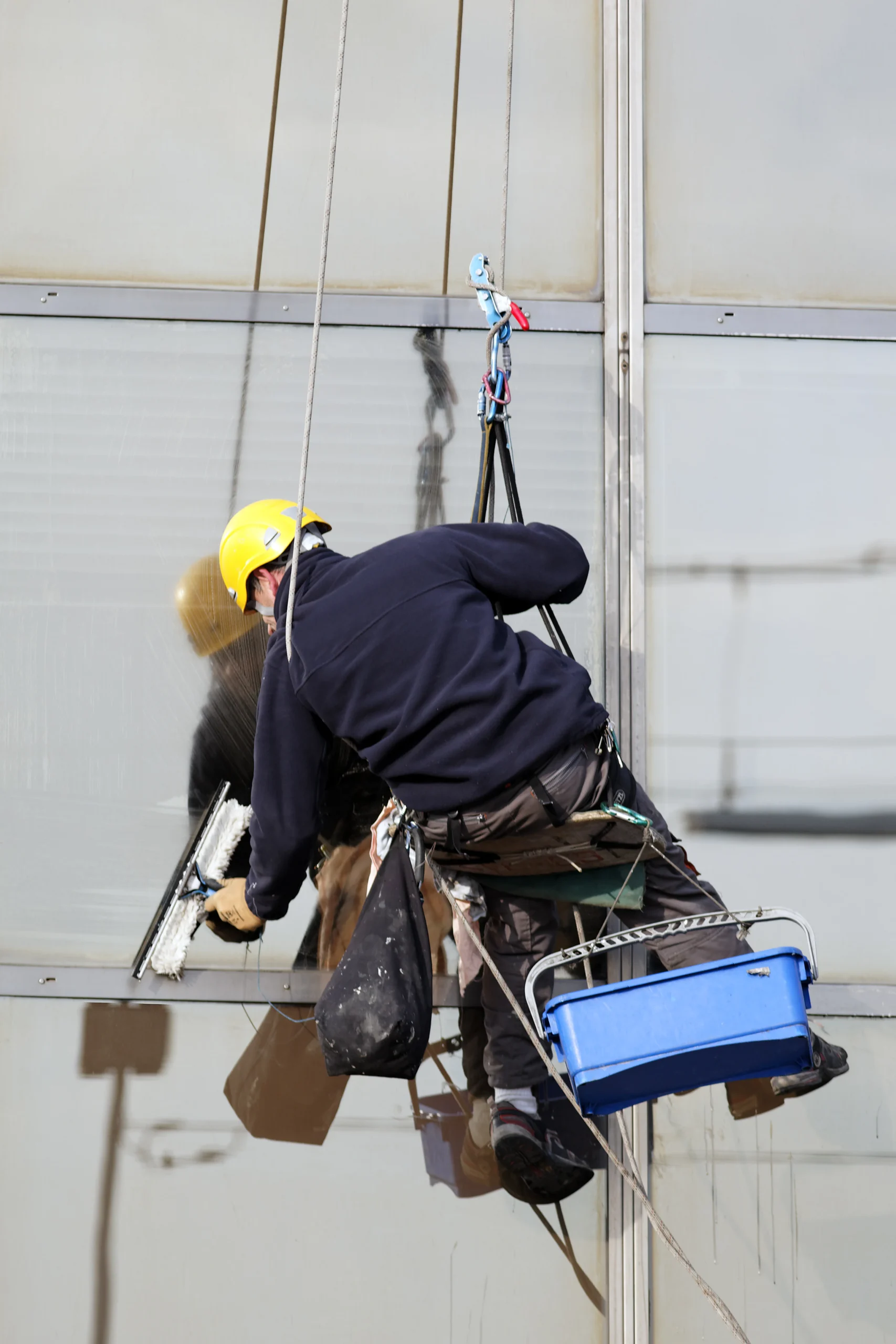
High-rise window cleaning safety focuses on planning, specialized protective gear, and rigorous training. By following strict protocols at every stage, professional cleaners drastically reduce the risks of working at extreme heights.
Safety Practices High-Rise Window Cleaners Follow on the Job
If you’ve ever caught yourself looking up at towering skyscrapers and wondered, “How do high-rise window cleaners ensure safety during the job?”, you’re not alone. Keeping those massive glass exteriors spotless isn’t just about having the right cleaning solution, it’s about having a robust set of safety practices. In this article, you’ll get an inside look at the precautions professionals take so you can better understand why hiring a reputable team is key.
Plan for hazard assessments
Before anyone sets foot on a scaffold, a professional window cleaning team conducts a thorough site review. This step is all about identifying potential danger spots and creating a tailored plan.
- Check building design: Odd-shaped ledges, decorative overhangs, or older window frames may require specific harness setups.
- Assess weather patterns: Wind speeds, temperature drops, and rain forecasts can all shift your cleaning timeline.
- Coordinate with property managers: Letting tenants know about upcoming work helps avoid surprises and prevents accidental interference.
Use the right protective gear
Gear is everything when you’re hundreds of feet above the ground.
- Harnesses: Each cleaner wears a full-body harness that attaches to a secure anchor point.
- Helmets: These safeguard against falling debris or collisions with building edges.
- Non-slip boots: Footwear with strong grip keeps workers stable, even on slick surfaces.
- Protective eyewear and gloves: Eyes are shielded from debris, and gloves enhance grip on equipment.
Secure reliable rope systems
A sturdy rope system is the backbone of high-rise window cleaning safety during the job. Let’s be honest, nobody wants to rely on worn-out lines when you’re high in the sky.
- Redundant lines: Using two separate lines (a main rope plus a backup) is standard practice, so if one fails, there’s another in place.
- Daily inspections: Experienced cleaners examine ropes meticulously for frays or weakness. Any sign of wear means it’s replaced immediately.
- Approved anchor points: Each rope must attach to a secure element on the building’s structure. Certified anchors meet strict load requirements so they can support all the necessary weight.
Train for emergencies
Comprehensive, ongoing training helps window cleaners respond quickly if anything goes awry.
- Regular drills: Fire drills aren’t just for office workers. Well-trained pros practice rope rescue techniques and know how to stabilize a coworker who might be in trouble.
- Medical preparedness: First-aid knowledge can be crucial, especially if a minor injury occurs at such heights and immediate down-to-ground assistance isn’t readily available.
- Communication protocols: Teams rely on radio or phone contact to coordinate tasks, check in on each other, and call for help if needed.
Monitor weather conditions
Strong gusts or sudden storms can compromise safety in a split second.
- Wind speed checks: Gusts above the manufacturer’s recommended threshold can sway platforms dangerously, so work is paused until conditions improve.
- Temperature extremes: Icy surfaces mean less traction, while extreme heat requires hydration breaks to avoid fatigue.
- Real-time monitoring: If the forecast takes a turn, cleaners often suspend the job, because it’s better to wait it out than risk an accident.
Follow strict protocols
No matter how many years of experience someone has, there’s a detailed standard operating procedure they follow every single time.
- Daily checklists: Equipment is inspected top to bottom, ensuring that even minor defects are caught.
- Work sequence: Crews typically start from the top and move down. This approach keeps dirty water from trickling onto freshly cleaned windows.
- Proper chemical handling: Eco-friendly solutions are often used, but all cleaners need to know how to safely store and dispose of cleaning agents.
How Do High-Rise Window Cleaners Ensure Safety During the Job , CR Maids
Ultimately, how high-rise window cleaners ensure safety during the job comes down to focused planning, expert training, and reliable technology. If you’re looking for top-notch results that won’t compromise well-being on your property, it pays to work with specialists who prioritize safety at every stage of the process.
Ready for spotless, streak-free windows that reflect the professionalism of your business? Consider hiring a qualified commercial window cleaning team that knows exactly how high-rise window cleaners ensure safety during the job. You’ll save yourself a world of stress, and your building’s façade will shine like new day after day
Schedule Your High-Rise Window Cleaning with Safety Experts
Keep your building spotless while ensuring every cleaner’s safety from start to finish. Choose CRmaids, your trusted professionals in high-rise window cleaning safety. Contact us today to book a reliable, fully insured service that safeguards both your property and everyone around it.
Frequently Asked Questions
1. Why is window cleaning safety so strict?
When you’re dealing with extreme heights, even small mistakes can be life-threatening. Safety standards minimize risks and protect both workers and bystanders.
2. Do all cleaners undergo special training?
Yes. Professional companies require certification and ongoing instruction. This includes rope access training, first-aid drills, and equipment handling tests.
4. Can cleaning happen in bad weather?
Safety guidelines say no. If strong winds or storms are predicted, the cleaning is postponed. It’s not worth endangering the crew or risking damage to the building.
5. What equipment is used for high-rise window cleaning?
Professional high-rise window cleaning relies on specialized equipment designed for safety, efficiency, and spotless results. The main tools include rope descent systems (RDS), bosun’s chairs, and suspended scaffolding to provide secure access to tall façades. Cleaners also use water-fed poles, squeegees, and brush heads to remove dirt and streaks effectively. In addition, harnesses, helmets, and industrial-strength ropes ensure every technician’s safety.
6. How much does high-rise window cleaning cost?
The price of high-rise window cleaning depends on several factors building height, accessibility, window quantity, and cleaning frequency. On average, professional cleaning costs between $5 and $15 per window, or may be calculated per square meter for larger glass surfaces. Additional considerations like weather conditions, architectural complexity, and extra treatments (such as stain removal or protective coatings) can affect the total.
7. Are high-rise window cleaning services available in my city?
Yes, in most urban and metropolitan areas, high-rise window cleaning services are widely available. Professional teams like CRmaids operate across multiple cities, offering fully insured and safety-certified services for commercial, residential, and mixed-use high-rises. Whether your property is a downtown office tower or a coastal condominium, expert cleaners can adapt their methods to your region’s weather patterns, building structure, and local regulations.
Key Takeaway
- Professional cleaners always start with a thorough hazard assessment.
- Proper gear (like harnesses and dual-rope systems) minimizes risk at extreme heights.
- Weather monitoring and immediate schedule shifts ensure the job isn’t rushed under dangerous conditions.
- Continuous training means teams know exactly what to do if emergencies arise.
- Strict protocols safeguard everyone involved, including passersby near the building.