
If you’ve ever asked yourself, How do I install gutters myself, this guide is for you. We’ll walk you through everything from what gutter installation entails to the tools you’ll need, common pitfalls, and expert insights, empowering you to confidently tackle this essential home improvement.
How Do I Install Gutters Myself, and Is DIY the Right Choice for My Home?
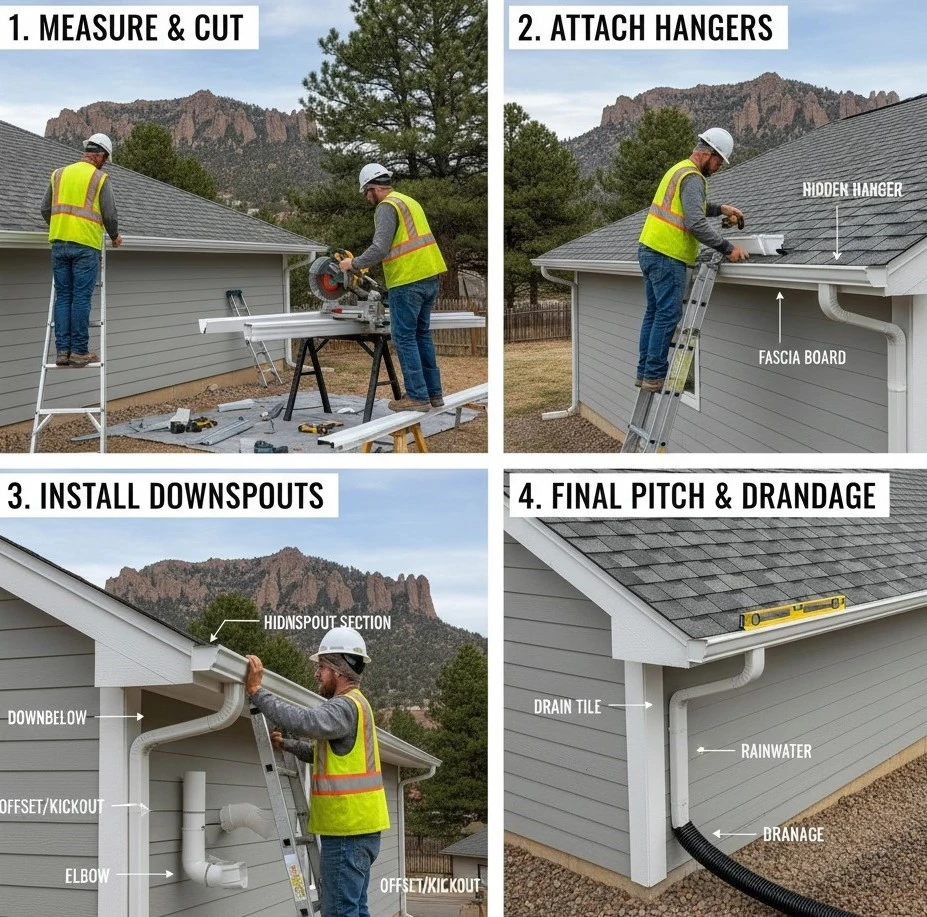
Gutter installation is the process of fitting a system of channels along the edges of your roof to direct rainwater safely away from your home’s foundation. Properly installed gutters prevent water damage, soil erosion, and foundation issues by controlling runoff. If you’re asking, “How do I install gutters myself?”, the answer is that DIY gutter installation typically involves purchasing sectional gutter kits, measuring and cutting lengths, attaching hangers, installing downspouts, and sealing joints. While this approach can save money, usually costing around $250 to $1,000 for materials, it’s best suited for single-story homes with low-pitch roofs, as it requires ladder safety and precise alignment to ensure proper drainage.
Why Do Gutters Matter?
Gutters are a crucial defense against water damage that can lead to costly repairs. They protect siding, landscaping, and basements from flooding and mold. In regions like Castle Rock, gutters help manage snowmelt and heavy rain, safeguarding your property year-round.
Benefits and Types of Gutters
Benefits of Installing Gutters Yourself
- Cost Savings: DIY installation can save significant labour costs.
- Customization: You can select materials and styles that match your home.
- Satisfaction: There’s a rewarding sense of accomplishment in completing a home project yourself.
Types of Gutters
- Aluminium Gutters: Lightweight, rust-resistant, and affordable.
- Vinyl Gutters: Easy to install, budget-friendly but less durable.
- Steel Gutters: Very durable but prone to rust if not maintained.
- Copper Gutters: Long-lasting and visually striking but expensive.
How to Install Gutters Yourself: Step-by-Step
Tools You’ll Need for Gutter Installation
- Measuring tape: A flexible ruler used to measure the length of your roof edges accurately, ensuring gutters and downspouts fit perfectly.
- Ladder and safety gear: A sturdy ladder is essential for reaching your roof safely, while safety gear like gloves and goggles protects you during installation.
- Hacksaw or tin snips: Cutting tools used to trim gutters and downspouts to the required lengths for your home.
- Drill with bits: A power tool used to drill holes and drive screws when attaching hangers and gutters to the fascia board.
- Level: A tool that helps you maintain the proper slope of gutters to ensure water flows correctly toward the downspouts.
- Sealant gun: A device used to apply waterproof sealant along gutter seams and joints to prevent leaks.
- Screws and hangers: Screws secure the hangers, which support and hold the gutters firmly in place along the roofline.
- Downspout elbows and outlets: Components that connect gutters to downspouts, guiding water from the roof to the ground or drainage system.
Step 1: Plan and Measure
Begin by carefully measuring the length of the roofline where you plan to install your gutters. Use a measuring tape to record accurate measurements along all eaves. This helps you determine how much gutter material you will need. Don’t forget to identify where downspouts should be placed, ideally near corners or areas where water tends to pool. Generally, downspouts should be spaced every 20 to 30 feet for effective drainage. Writing down all these measurements ensures you purchase the right amount of materials and avoid costly mistakes or shortages.
Step 2: Purchase Materials
Once you have your measurements, decide on the gutter material that best suits your home’s needs, budget, and aesthetic. Aluminium is lightweight and affordable, while vinyl gutters are easy to install but less durable. Copper offers a premium look but is expensive. Consider the climate in Castle Rock, CO, and the maintenance required for each material. Purchase all necessary components including gutters, hangers, screws, downspout elbows, outlets, and sealant. Buying a little extra material is wise to cover mistakes or unexpected needs.
Step 3: Install the Hangers
Next, mark the fascia board where you will attach the gutter hangers. It is important to create a slight slope approximately 1/4 inch drop for every 10 feet of gutter to allow rainwater to flow naturally toward the downspouts. Using a level, draw a chalk line or mark your slope points to guide hanger placement. Secure the hangers to the fascia with screws at regular intervals, usually every 2 feet, to ensure gutters are well-supported and stable. Proper hanger installation prevents sagging or detachment later.
Step 4: Cut and Attach Gutters
With the hangers in place, cut the gutter sections to your measured lengths using a hacksaw or tin snips. If your gutter system includes multiple sections, join them using connectors and seal the seams with waterproof gutter sealant to prevent leaks. Carefully snap or screw the gutter into the hangers, making sure each section is firmly supported and follows the slope line. Double-check all joints and connections for tightness and proper sealing.
Step 5: Install Downspouts
Attach downspout outlets to the gutter sections at the marked locations. Connect elbows and straight sections of the downspout, then secure the entire downspout assembly to the side of your house using brackets or straps. Ensure downspouts extend far enough away from your foundation to direct water safely into drainage areas or splash blocks. Proper installation here is key to preventing foundation damage and soil erosion around your home.
Step 6: Test Your Installation
Finally, test your newly installed gutters by running water through them, either with a hose or during a rainstorm. Watch carefully for any leaks, pooling, or overflow. Check that water flows smoothly down to the downspouts and away from your home. If you notice any leaks, apply additional sealant where needed. Adjust any sections that don’t maintain the proper slope. This final step ensures your gutter system will protect your home effectively through all seasons.
How to Choose Gutters Effectively
Consider your climate, home architecture, and maintenance willingness. For example, aluminium gutters balance cost and durability well for Castle Rock’s climate. For busy homeowners, gutter guards may reduce cleaning frequency, and services like CR Maids can provide professional gutter cleaning alongside home cleaning needs.
Why Professional Cleaning Complements Your Gutter Installation
While DIY gutter installation is achievable, maintaining them is just as important. CR Maids, serving Castle Rock, CO, specializes in detailed home cleaning, including gutter debris removal and maintenance. Regular upkeep ensures your gutters function properly, extending their lifespan and protecting your home investment.
How Do I Install Gutters Myself Without Making These Common Mistakes?
Common mistakes during gutter installation include having an incorrect slope, which prevents proper drainage and leads to overflow or standing water; installing too few downspouts, causing water backups and overflow; and skipping the sealing of seams, resulting in leaks and potential water damage. Avoiding these errors is key to a functional, long-lasting gutter system.
From Gutters to Deep Cleans, Let CR Maids Handle the Dirty Work!
By following this step-by-step guide and learning from expert insights, you can protect your Castle Rock home effectively while saving money. For ongoing home maintenance including gutter cleaning, seasonal prep, and more, consider trusted local services like CR Maids to keep your property in top shape. Have questions or need help getting started? Book a service online or give us a call today, we’re happy to assist!
Frequently Asked Questions
1. How much does gutter installation cost?
The cost varies based on materials, home size, and complexity but typically ranges from $4 to $15 per linear foot, which usually includes both materials and labour.
2. What is the average cost of gutter installation?
For an average-sized home, professional gutter installation generally costs between $1,000 and $2,500 depending on the material and installation requirements.
3. What are the best gutter materials for installation?
Aluminium gutters are popular due to their balance of durability, lightweight design, and affordability. Copper gutters offer superior longevity and aesthetic appeal but come at a higher price.
4. How long does it take to install gutters?
Most DIY installations take a weekend or two, while professional installers can usually complete the job in a day or two depending on the home’s size and complexity.
5. Can I install gutters myself without professional help?
Yes, with the right tools, safety precautions, and a clear step-by-step plan, many homeowners successfully install gutters themselves, especially on single-story homes.
Key Takeaways
- Gutters protect your home from costly water damage.
- DIY installation saves money but requires precise measurement and proper slope.
- Use durable materials suited for Castle Rock’s weather, like aluminium.
- Regular cleaning and maintenance extend gutter life, professional services can help.
- CR Maids offers comprehensive cleaning services to complement your home care routine.