
Cleaning a house after construction involves more than a quick vacuum. It requires staged cleaning, specialised tools, and safety precautions to remove fine dust, adhesives, paint splatter, and debris. This guide breaks down each step clearly plus when it’s worth hiring pros like CR Maids for a safer, faster finish.
Cleaning a House After Construction: Why It Matters
Understanding how do you clean a house after construction is essential for homeowners, contractors, and property managers. When cleaning a newly renovated home, construction dust and residues aren’t just unsightly they can also be hazardous. Fine particles from drywall, sawdust, and cement can linger in vents, coat surfaces, and significantly affect indoor air quality, which is why proper cleaning a newly renovated home is crucial for safety and comfort.
A thorough post-construction clean ensures:
- The space is safe and move-in ready
- Surfaces last longer (dust can scratch floors and fixtures)
- Property photos and staging look better
- Defects or damage are easier to spot before handover
For professional assistance, explore CR Maids post-construction cleaning services.
Step-by-Step Guide ,How Do You Clean a House After Construction?
Cleaning a newly built or renovated home should be done in three phases: rough clean, deep clean, and final detail clean.
1. Start With the Rough Clean
This stage removes bulk debris and prepares the home for detailed cleaning.
Tasks Include:
- Collect and dispose of leftover materials (scrap wood, packaging, drywall offcuts)
- Sweep and remove loose dust from floors
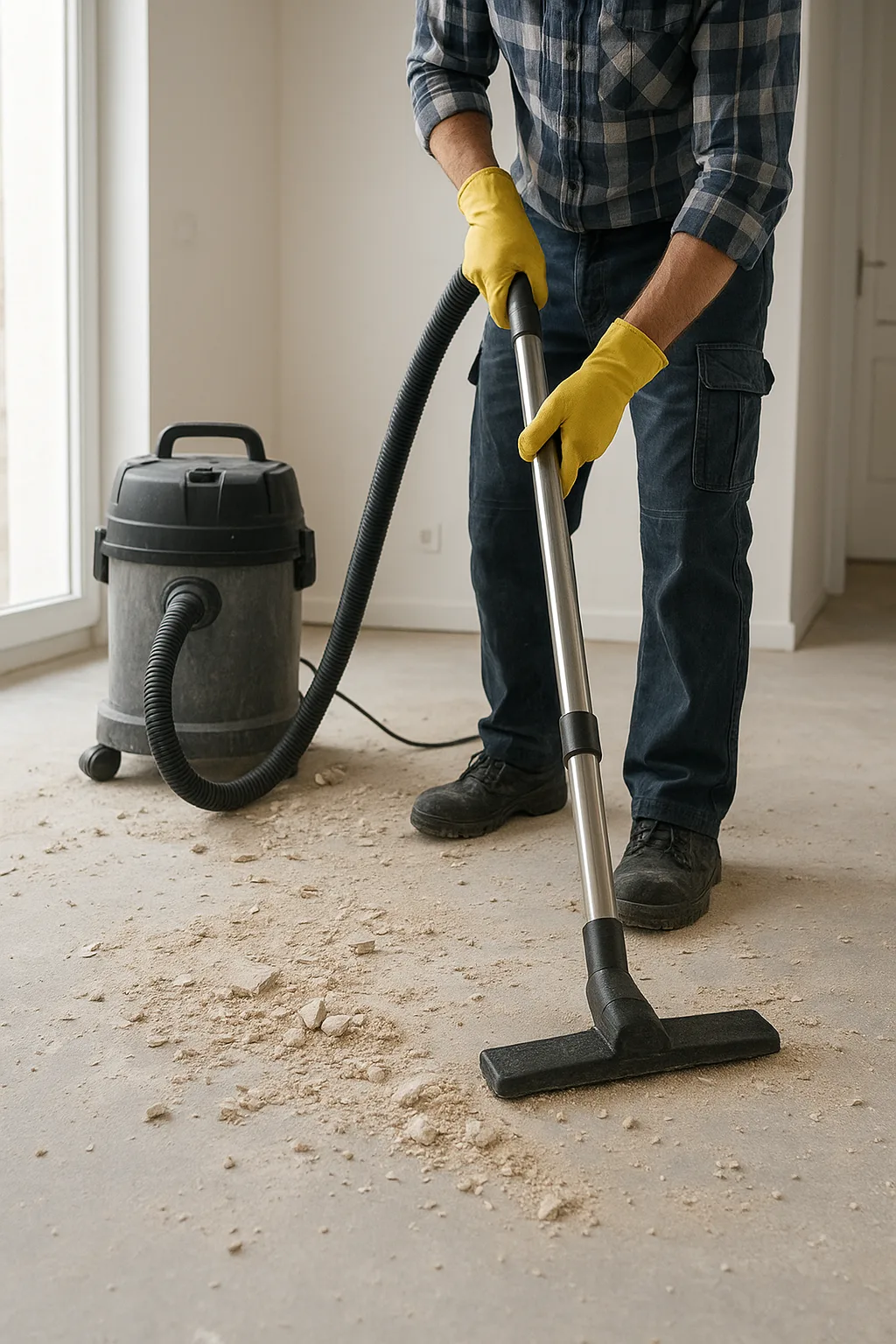
- Using a shop vacuum with HEPA filter for heavier debris
- Brush down walls to remove settling dust
Pro Tip: Use contractor bags (3–6 mil thick) to avoid tears from sharp debris.
Learn more about deep cleaning a house checklist.
2. Deep Clean All Surfaces
During this phase, you’re addressing dust, dirt, paint splatter, and construction residue.
Walls & Ceilings:
- Dust with a microfibre mop or electrostatic duster
- Spot clean scuffs, pencil marks, and adhesive remnants
Windows & Glass:
- Scrape paint flecks with a razor scraper (held at a 45° angle)
- Clean frames, tracks, sills, and screens
- Polish glass with an ammonia-free cleaner
Cabinetry & Built-ins:
- Vacuum inside drawers and cupboards
- Wipe down shelves, hinges, and hardware
- Remove stickers and protective films
Floors:
- Sweep and vacuum meticulously (several passes)
- Mop hard surfaces with a pH-neutral floor cleaner
- Steam-clean carpets if construction dust penetrated fibres
Quick Stat: Construction dust can take 48–72 hours to fully settle expect to clean some areas twice.
3. Clean HVAC Systems & Airflow Areas
Dust commonly hides in:
- Air vents
- Return ducts
- Ceiling fan blades
- Exhaust fans
Remove vent covers, vacuum inside ducts (as far as safely possible), and wipe all fixtures.
Pro Tip: Replace HVAC filters immediately after construction.
4. Detail Clean Fixtures and Final Touches
Kitchens:
- Clean appliances (interior + exterior)
- Degrease stovetops, range hoods, and splashbacks
- Polish taps and stainless steel surfaces
Bathrooms:
- Remove grout haze from tiles
- Clean glass shower screens (ensure no residue scratches)
- Sanitize sinks, toilets, and tubs (bathroom deep cleaning services)
Lighting & Outlets:
- Dust light fittings carefully
- Remove fingerprints from switches, outlets, and door handles
Final Floor Finish:
After all dusting and wiping, finish floors last so they stay pristine.
At this stage, your property should be move-in ready or ready for tenants, staging, handover, or inspection.
Tools You Need for Residential Post-Construction Cleaning
Here’s what you’ll need to follow the essential post-construction house cleaning steps for a safe and effective clean. By understanding and implementing these post-construction house cleaning steps, you can ensure every surface is spotless and the home is truly move-in ready.
Essential Tools
- Commercial-grade shop vacuum (with HEPA filter)
- Microfibre cloths and dusters
- Extension dusting pole
- Razor blade scraper
- Buckets, mops, spray bottles
- Soft-bristle brushes
Chemicals & Cleaners
- pH-neutral floor cleaner
- Ammonia-free glass cleaner
- Adhesive remover
- Disinfectant spray
Safety Equipment
- N95 masks or respirators
- Gloves
- Safety goggles
Tip: Standard vacuums can recirculate fine dust HEPA shop vacs are essential.
Can You Do Post-Construction Cleaning Yourself?
Yes, but it depends on the size and condition of the project.
DIY Is Feasible When:
- The renovation was minor
- There’s limited debris
- You already have proper tools
- You’re not on a tight timeline
Hiring Pros Is Better When:
- The space is large (Castle Rock house cleaning service)
- There’s heavy dust or multiple construction materials involved
- Air quality is a concern
- You need guaranteed results for inspections or handovers
Professionals like CR Maids are trained for construction dust removal, paint residue cleaning, and detailed finishing.
What’s the Difference Between Construction and Renovation Cleaning?
While the terms are sometimes used interchangeably, they refer to different scopes:
Construction Cleaning
- Occurs after new builds or major structural work
- Involves removing heavy debris, cement dust, stickers, protective coverings, and paint residue
- More intensive and multi-staged
Renovation Cleaning
- Focuses on specific rooms or areas
- Less debris, but fine dust still needs thorough removal
- Often completed faster and with fewer tools
If unsure, CR Maids can assess your project and provide tailored services.
Tips for Removing Construction Dust (Without Spreading It)
One of the biggest challenges after construction is knowing how to remove construction dust from a house, as fine particles settle on every surface. Learning how to remove construction dust from a house effectively ensures a safe, clean, and move-in-ready environment.
Best Techniques
- Always dust top to bottom to avoid re-contaminating surfaces
- Use damp dusting to trap particles
- Avoid sweeping dry (it sends dust airborne)
- Run an air purifier for 24 48 hours
- Repeat vacuuming dust often resettles
Don’t Forget Hidden Places
- Door frames
- Behind appliances
- Window tracks
- Under sinks
- Closet shelving
When Should You Call Professional Post-Construction Cleaners?
You should consider expert help when:
- Time is limited (Book Now)
- Dust is excessive (common in drywall-heavy projects)
- You need a guarantee of a move-in ready property
- Managing rentals or commercial properties (Commercial and office cleaning)
Professionals like CR Maids offer specialised equipment, trained cleaning teams, and a consistent process that ensures nothing is missed.
Recommended Resources
These trusted sources offer additional insights into safe cleaning and air quality:
- Environmental Protection Agency (EPA) – Indoor Air Quality Resources
- Cleaning Industry Management Standards (ISSA)
- National Asthma Council – Dust Management Guides
How Do You Clean a House After Construction
Cleaning a house after construction is a meticulous process that requires the right sequence, proper tools, and attention to detail. While DIY is possible for small projects, major renovations or full builds often need expert support.
If you want a move-in-ready home without the stress or time investment, CR Maids provides reliable, detail-focused post-construction cleaning that ensures every corner is safe, spotless, and ready to enjoy.
Get Your Home Move-In Ready with CR Maids
Need help bringing your new build or renovated property to a truly clean, dust-free finish? CR Maids offers professional post-construction and renovation cleaning services designed for homeowners, contractors, and property managers. Explore more at their website to get started.
Frequently Asked Questions
1. What tools are needed for residential post-construction cleaning?
Residential post-construction cleaning typically requires HEPA vacuums, microfiber cloths, dusters, mops, scrapers, extension poles, glass cleaners, and protective gear such as gloves and masks.
2. Can I do post-construction cleaning myself?
You can do post-construction cleaning yourself, but it is often challenging because construction dust is fine, persistent, and requires specialized tools and techniques to remove completely.
3. What is the difference between construction and renovation cleaning?
Construction cleaning generally refers to cleaning after a brand-new build, while renovation cleaning focuses on cleaning a lived-in home after remodeling, which often requires extra attention to blended dust and existing household surfaces.
4. How long does post-construction cleaning take?
A standard home may take anywhere from 6–20 hours, depending on the scale of dust, square footage, and number of cleaners.
5. Is post-construction dust harmful?
Yes. Fine particles can irritate lungs, trigger allergies, and impact indoor air quality. That’s why proper cleaning and filtration are crucial.
Key Takeaways
- Post-construction cleaning must be done in three phases: rough clean, deep clean, detail clean.
- The right tools, especially a HEPA vacuum are essential.
- Fine dust can take days to settle and must be removed safely.
- DIY is possible for small updates; large builds are best left to pros like CR Maids.
- Proper cleaning improves safety, air quality, and property presentation.

Karina Cohen is the owner of CR Maids, a local cleaning company serving the Greater Denver area. With a background as a global executive in fashion, software, retail, and financial services, she has led business strategy, mergers and acquisitions, and cross-cultural teams across the US, Europe, and Asia.
Karina holds a Global Executive MBA from Duke University’s Fuqua School of Business and a Bachelor of Science in Finance and Marketing from Fordham University. She brings this strategic expertise into CR Maids, where her mission goes beyond spotless homes—she is committed to empowering her team, creating financial security, and giving back to the community.
When she’s not leading CR Maids, Karina homeschools her daughter, serves on the board of Duke University Colorado, and supports initiatives that strengthen families and small businesses.