
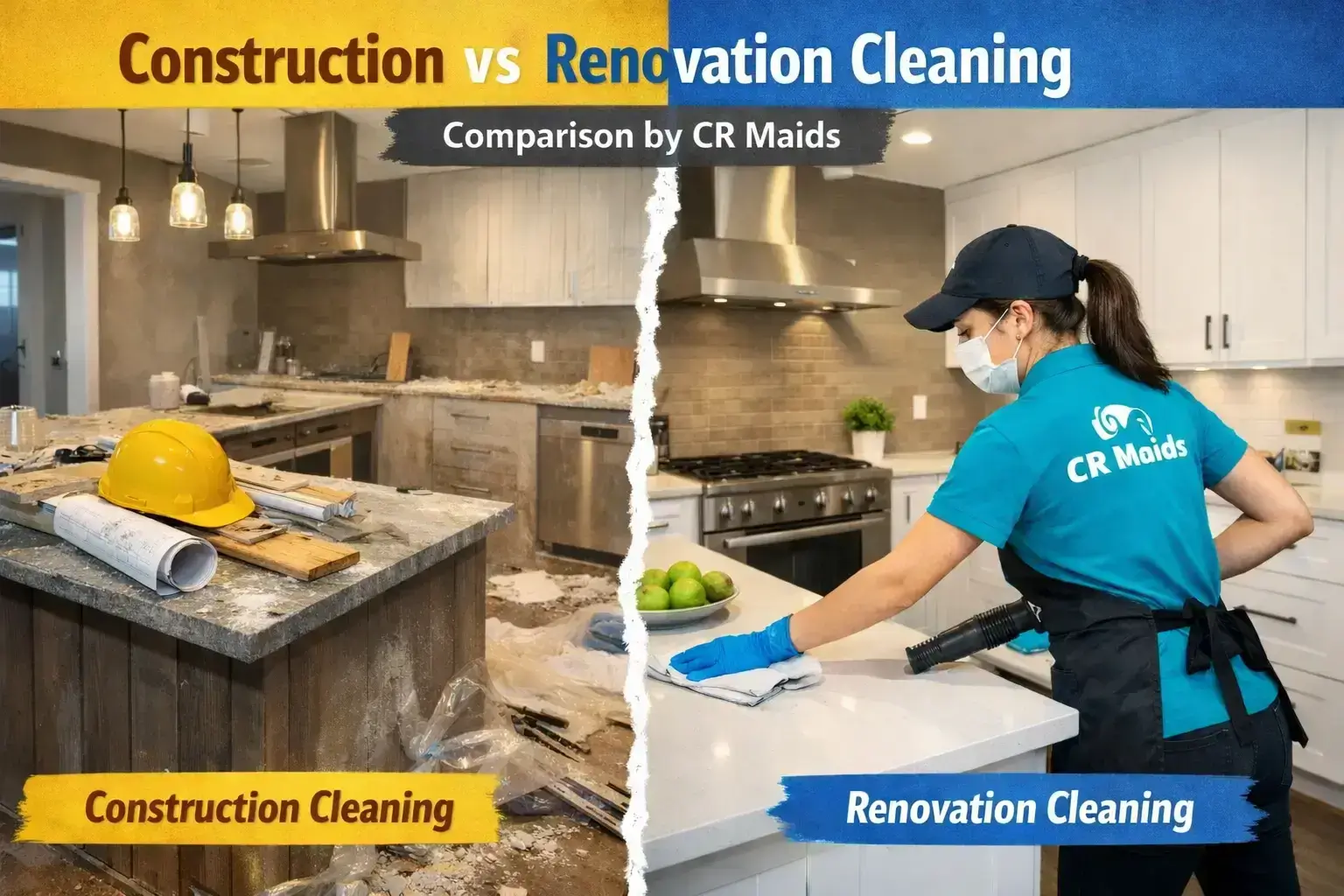
Construction and renovation cleaning may seem similar, but they target different stages of property work. Construction cleaning removes debris from new builds, while renovation cleaning tackles dust and residues after remodeling. Understanding the distinction ensures a safe, healthy, and move-in-ready space.
Understanding Construction vs Renovation Cleaning
When homeowners or property managers schedule cleaning after building or remodeling, it’s crucial to know what is the difference between construction and renovation cleaning. While both aim to create a clean, habitable environment, their scope, techniques, and equipment differ significantly.
Construction Cleaning
Construction cleaning happens after a property is newly built or after major structural work. Its focus is on removing raw debris, dust, and leftover materials before a property is ready for interior finishing or occupancy.
Key characteristics:
- Stage: Final phase of construction, after builders leave.
- Tasks:
- Removing dust, plaster, paint splatters, and adhesive residues
- Cleaning floors, windows, and fixtures
- Disposing of leftover construction materials
- Tools & Equipment: Industrial vacuums, dust mops, scrapers, and heavy-duty cleaning solutions
Quick Stat: According to industry surveys, up to 80% of post-construction dust is microscopic and can trigger allergies if not thoroughly removed.
Renovation Cleaning
Renovation cleaning focuses on homes or offices that have been remodelled or refurbished. It deals with the mess caused by alterations such as painting, flooring, or installing cabinetry.
Key characteristics:
- Stage: After remodeling tasks but before occupancy
- Tasks:
- Removing fine dust from sanding or drilling
- Cleaning new appliances, cabinetry, and countertops
- Polishing surfaces and restoring shine
- Tools & Equipment: HEPA vacuums, microfiber cloths, gentle surface cleaners, and sometimes specialized polishers
Example: Renovating a kitchen may leave behind dust in cabinets and vents, which requires detailed cleaning that construction cleaning wouldn’t cover.
Construction Project Stages vs Renovation Project Stages
Understanding cleaning needs also involves recognising the stages of each project type:
| Stage | Construction Cleaning Focus | Renovation Cleaning Focus |
| Initial Build / Demolition | Not applicable | Remove old fixtures, prep surfaces |
| Structural Completion | Remove debris, dust, and leftover materials | N/A |
| Finishing Touches | Clean windows, floors, fixtures | Remove paint dust, polish surfaces |
| Final Inspection | Ensure move-in ready | Ensure remodelled spaces are spotless |
How Do You Clean a House After Construction?
Cleaning after construction requires both strategy and the right tools. Here’s a professional breakdown:
- Step 1: Remove Large Debris: Start with leftover materials like nails, wood scraps, and packaging. Heavy-duty gloves and garbage bins are essential.
- Step 2: Dust and Vacuum: Use HEPA-filter vacuums for fine dust. Dusting should start from ceiling to floor to capture settled particles.
- Step 3: Clean Surfaces and Fixtures: Windows, doors, tiles, and appliances often need scrapers or specialized cleaning solutions to remove paint, adhesives, or plaster.
- Step 4: Floor Care: Depending on the flooring, sweep, mop, or polish. Construction residues can scratch surfaces if neglected.
Pro Tip: Even after thorough cleaning, microscopic dust may linger for weeks. Consider a follow-up clean or air purification for sensitive occupants.
What Tools Are Needed for Residential Post-Construction Cleaning?
Professional-grade equipment ensures efficiency and safety. Common tools include:
- HEPA vacuum cleaners
- Microfiber cloths and dusters
- Industrial floor scrubbers
- Scrapers for paint and adhesive
- Protective gear (gloves, masks, goggles)
- Eco-friendly or commercial cleaning solutions
Quick Stat: Using HEPA filters can reduce post-construction dust exposure by up to 90%, improving indoor air quality for occupants.
Can I Do Post-Construction Cleaning Myself?
While DIY cleaning is possible, it can be time-consuming and challenging due to:
- Fine dust infiltrating ventilation and hidden areas
- Risk of damage to newly installed fixtures
- Need for specialized tools and protective equipment
Professional services like CR Maids bring experience, efficiency, and safety, ensuring a thorough clean without compromising new surfaces.
Benefits of Professional Construction & Renovation Cleaning
- Healthier Indoor Air: Removes dust, allergens, and chemical residues
- Time-Saving: Professionals can clean a large property faster
- Detailed Finish: Attention to nooks, vents, and fixtures
- Property Value Protection: Prevents damage to new surfaces and materials
Key Insights: What Is the Difference Between Construction and Renovation Cleaning?
Understanding the difference between construction and renovation cleaning is crucial for homeowners, property managers, and real estate developers. While DIY cleaning is possible, professional services like CR Maids ensure your property is move-in ready, safe, and spotless. From removing microscopic dust to polishing surfaces, expert cleaners save time, protect your investment, and create a healthier indoor environment.
Ready for a Spotless Space?
Whether you’re completing a new build or finishing a renovation, a professional clean makes all the difference. CR Maids specialises in construction and renovation cleaning, ensuring every corner is dust-free, polished, and move-in ready. Save time, protect your investment, and enjoy a healthier home or workspace.
Schedule your cleaning today with CR Maids and experience the ultimate in post-construction and renovation care!
Frequently Asked Questions
1. How do you clean a house after construction?
Start with large debris removal, then dust and vacuum from top to bottom. Clean fixtures, windows, and floors using appropriate tools and solutions. Professionals like CR Maids follow a systematic approach for thorough results.
2. What tools are needed for residential post-construction cleaning?
Key tools include HEPA vacuums, microfiber cloths, scrapers, industrial floor cleaners, and protective gear. Optional: polishers and eco-friendly cleaning agents for delicate surfaces.
3. Can I do post-construction cleaning myself?
Yes, but it’s labor-intensive and may miss hidden dust or damage surfaces. Professionals save time and provide a deeper, safer clean.
4. How long does post construction cleaning take for a residential property?
It varies by size and project complexity. A standard 3-bedroom home may take 8 to 12 hours DIY, whereas professional teams can complete it in 2 to 4 hours.
5. How often should renovation cleaning be done?
It’s typically a one-time deep clean post-project, but follow-ups may be needed for extensive renovations or allergy-sensitive occupants.
Key Takeaways
- Construction cleaning targets debris from new builds; renovation cleaning targets dust from remodels.
- The right tools, including HEPA vacuums and scrapers, are essential for thorough post-construction cleaning.
- Professionals like CR Maids save time and reduce health risks while providing a meticulous clean.
- Cleaning should always follow project stages to ensure safety and effectiveness.
- Follow-up cleaning may be needed for sensitive environments or extensive renovations.

Karina Cohen is the owner of CR Maids, a local cleaning company serving the Greater Denver area. With a background as a global executive in fashion, software, retail, and financial services, she has led business strategy, mergers and acquisitions, and cross-cultural teams across the US, Europe, and Asia.
Karina holds a Global Executive MBA from Duke University’s Fuqua School of Business and a Bachelor of Science in Finance and Marketing from Fordham University. She brings this strategic expertise into CR Maids, where her mission goes beyond spotless homes—she is committed to empowering her team, creating financial security, and giving back to the community.
When she’s not leading CR Maids, Karina homeschools her daughter, serves on the board of Duke University Colorado, and supports initiatives that strengthen families and small businesses.