
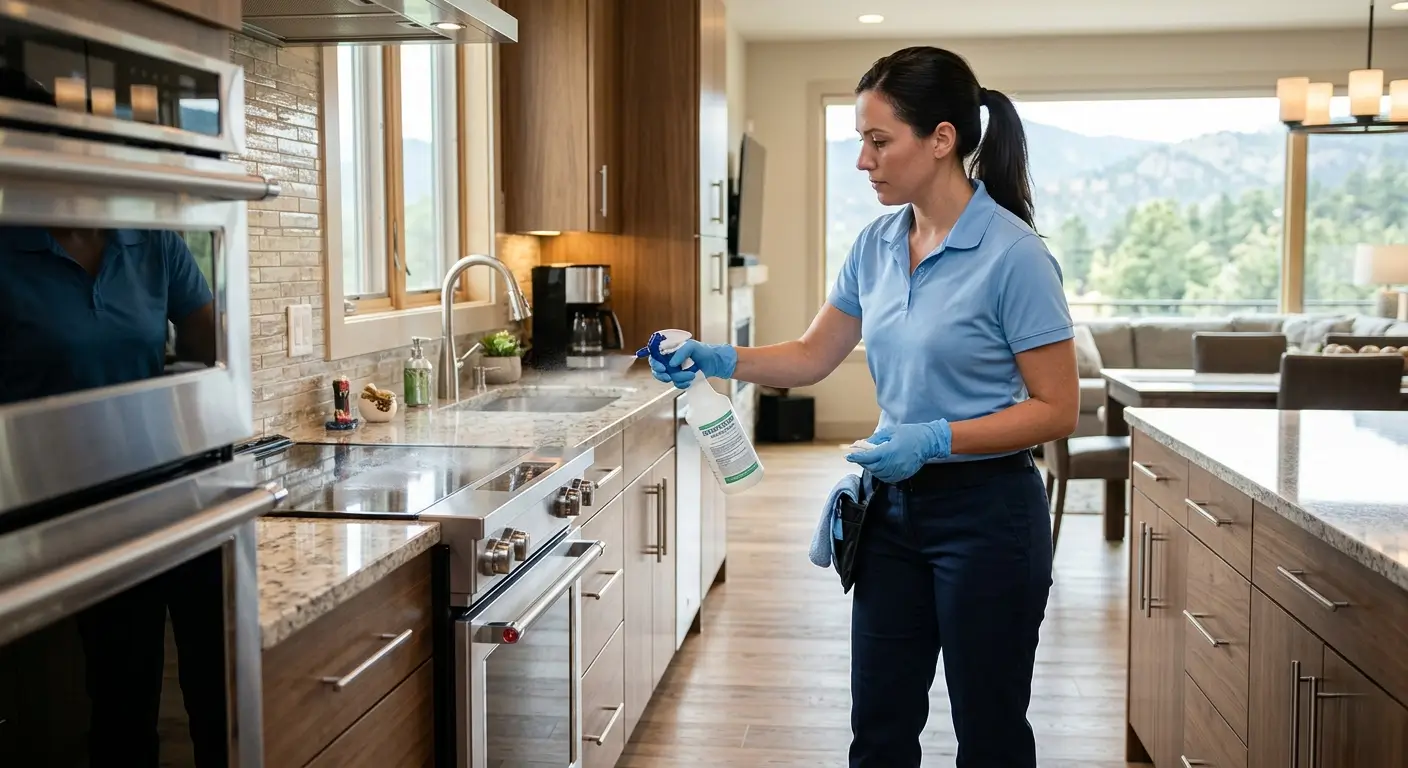
Sanitized vacation rental cleaning in Castle Pines is not the same as clean vacation rental cleaning. Sanitization requires EPA-registered products, documented dwell times, surface-specific protocols, and verification. This guide covers what genuine sanitization includes, why it protects 5-star ratings, and how to confirm a crew delivers it.
Why Sanitization Is a Different Standard Than Cleaning
Most Castle Pines short-term rental hosts use the words clean and sanitized interchangeably. They are not the same thing. A property can look spotless and still fail a sanitization standard because the disinfectant was applied and wiped immediately rather than allowed to dwell. A surface that looks clean and a surface that is actually sanitized are two different outcomes, and guests who encounter the gap between them write about it in reviews.
Sanitization is a defined technical standard. According to the CDC’s home cleaning and disinfection guidance, disinfectants must stay wet on surfaces for the contact time printed on the label, typically 30 seconds to 10 minutes, to kill pathogens. That contact time is the difference between a surface that looks clean and a surface that is genuinely sanitized. Any crew that sprays and wipes immediately is not sanitizing, regardless of what product they are using.
The consequence in a short-term rental is direct. Castle Pines guests who develop illness symptoms mid-stay or post-stay and trace the source to the property file hygiene complaints that platforms take seriously. The review that follows is not “it was a little dusty.” It is “we all got sick after staying here,” and that review damages the listing far more than a staging complaint ever would.
The deeper context on how documented systems drive consistent sanitization results is in our guide on how residential cleaners maintain quality in Castle Pines.
Sanitized Vacation Rental Cleaning in Castle Pines: The Six Standards
The honest answer to what sanitized vacation rental cleaning in Castle Pines actually requires comes down to six standards working together. Missing any one of them means the property is clean but not sanitized.
The six standards are:
- EPA-registered products: only products with registered disinfection claims meet the standard.
- Dwell-time discipline: products stay wet on surfaces for the label contact time.
- High-touch surface coverage: every surface guests contact frequently gets treated every visit.
- Surface-specific protocols: different surfaces need different products and techniques.
- Linen sanitation: linens laundered at the correct temperature and dried completely.
- Documentation and verification: sanitization protocol documented and verifiable by the host.
The rest of this guide walks through each standard, what it looks like in practice, and what to ask a provider before trusting them with your listing’s health reputation.
How Sanitized Vacation Rental Cleaning in Castle Pines Differs From Standard Cleaning
A standard vacation rental cleaning visit covers visible surfaces: counters wiped, floors mopped, bathrooms scrubbed. Sanitized vacation rental cleaning in Castle Pines layers a documented disinfection protocol on top of that visible clean. The crew applies EPA-registered disinfectants to specific surface categories, observes the label contact time, and verifies coverage before moving to the next zone. The difference is invisible to the eye and decisive in the petri dish.
EPA-Registered Products: The Baseline Requirement
The first standard for sanitized vacation rental cleaning in Castle Pines is product selection. Not every cleaning product that smells like disinfectant actually disinfects. The only products that meet a genuine sanitization standard are those registered with the U.S. Environmental Protection Agency as disinfectants with verified kill claims against specific pathogens.
According to the EPA’s Safer Choice program, certified products have been evaluated ingredient by ingredient against both safety and efficacy standards. For vacation rental hosts, the relevant EPA list is List N, which covers products effective against SARS-CoV-2 and other common respiratory pathogens. A crew that cannot name the EPA registration number of the product they use is almost certainly not using a registered disinfectant.
What to verify with any provider:
- EPA registration number: should be on the product label.
- Kill claim specificity: the product should list specific pathogens it is registered to kill.
- Application method: spray, wipe, or electrostatic application affects coverage.
- Dwell time on the label: the product is only effective when applied correctly.
For more on the specific disinfection products professional crews use, see our guide on home disinfecting service products in Castle Pines.
Dwell-Time Discipline: The Step Most Crews Skip
The second standard is the one that determines whether EPA-registered products actually work: dwell time. Disinfectants need to stay wet on a surface for the label contact time to kill the pathogens listed on the registration. Spray and wipe immediately, and the chemistry never completes. The surface looks sanitized and is not.
Trained crews apply disinfectant to all target surfaces in a zone before moving on, allowing the product to dwell while they work elsewhere. The sequence matters:
- Apply to all surfaces in the zone: toilets, sinks, faucet handles, light switches.
- Move to the next zone: stripping linens, wiping other surfaces, or working in a parallel room.
- Return and wipe after the dwell window: the product has completed the kill cycle by this point.
The most common sanitization failure in vacation rental cleaning is dwell time compression under time pressure. When a crew is running late on a four-hour turnover, dwell time is the first step they shorten. A documented sanitization protocol with timed dwell steps is the only operational control that prevents this from happening on every visit.
High-Touch Surface Coverage
The third standard is coverage: every surface a guest contacts frequently gets treated on every visit, not just the surfaces that look dirty. High-touch surfaces in a vacation rental carry a different pathogen load than residential homes because every guest changeover introduces a new set of contact points.
High-touch surfaces that require sanitization on every turnover:
- Faucet handles: kitchen and every bathroom, inside and outside.
- Light switches: every room, including hallways and closets.
- Door handles and knobs: every interior door.
- Remote controls: living room and bedrooms.
- Appliance controls: microwave, oven, coffee maker, dishwasher.
- Drawer and cabinet pulls: kitchen and bathrooms.
- Toilet flush handles: every bathroom.
- Thermostat controls: every unit in the property.
A crew that sanitizes counters and toilets but skips light switches and remote controls is providing partial sanitization. The missed surfaces are the ones guests touch most frequently and the ones that carry cross-contamination between stays.
Surface-Specific Protocols for Castle Pines Properties
The fourth standard is surface-specific application. Castle Pines vacation rentals lean toward premium finishes, and the wrong disinfectant on the wrong surface causes permanent damage. Sanitization protocols must account for the surface, not just the pathogen.
Surface-specific sanitization rules:
- Stone surfaces (granite, marble): pH-neutral EPA-registered disinfectant only. Bleach-based and acidic products etch stone permanently.
- Engineered hardwood: disinfectant spray applied to a cloth, never directly to the floor. Moisture warps the planks.
- Quartz counters: non-abrasive application only. Abrasive products dull the surface over time.
- Stainless steel: dedicated stainless-safe disinfectant, wiped with the grain. Generic sprays leave residue and streaks.
- Fabric and upholstery: fabric-safe disinfectant spray, not the same product used on hard surfaces.
- Electronics and screens: electronics-safe spray on a cloth, never sprayed directly onto the surface.
One of the most common sanitization mistakes in Castle Pines vacation rentals is applying a bleach-based disinfectant to stone counters or tile grout. The surface is sanitized and permanently damaged in the same application. For more on the full range of surface-appropriate products, see our guide on residential cleaning prices in Castle Pines.
Linen Sanitation Standards
The fifth standard covers linens specifically. Linens in a vacation rental carry a higher contamination risk than linens in a private home because every guest stay introduces new contact from an unknown health status. The CDC’s laundry hygiene guidance recommends washing potentially contaminated linens in the warmest water the fabric allows and drying completely before re-use.
For Castle Pines vacation rentals, this standard translates to:
- Water temperature: hot wash cycle for all bed linens and towels.
- Complete drying: no damp linens re-used or stored in a compressed state.
- Inventory swap model: pre-laundered sets brought to the property so on-site laundry cycles do not compress turnover time and rush the dry cycle.
- Separate handling: used linens bagged and handled separately from clean sets to prevent cross-contamination.
Inventory swap is the operational model that makes linen sanitation consistent across same-day turns. On-site laundering under time pressure produces incomplete dry cycles, which means re-introducing damp linens that have not fully sanitized.
Documentation and Verification
The sixth standard is what makes the other five verifiable: documentation. A sanitization protocol that is not documented is a protocol that exists only as long as the same crew member shows up every visit. When the crew rotates, documentation is what carries the standard forward.
Documentation for sanitized vacation rental cleaning in Castle Pines should include:
- Product log: which EPA-registered product was used, the registration number, and the application method.
- Dwell time record: documented contact time observed for each surface category.
- Coverage checklist: every high-touch surface checked off on every visit.
- Photo verification: timestamped photos of completed sanitization sent to the host before the next guest arrives.
Hosts who require photo verification as part of every turnover report receive the timestamped evidence they need to respond to hygiene complaints and, where applicable, to document their cleaning protocol for listing platforms that display enhanced cleaning certifications. The Airbnb AirCover damage reporting policy applies the same evidence-before-check-in standard to hygiene disputes that it applies to property damage claims.
How CR Maids Handles Sanitization in Castle Pines
CR Maids has served Castle Pines and Douglas County for over a decade, with the same dedicated crews servicing neighboring communities including Highlands Ranch and Lone Tree. Every crew member is background-checked, every sanitization visit follows a documented protocol using EPA-registered products, every dwell time is observed, and every visit is backed by a written satisfaction guarantee.
For hosts running back-to-back same-day turns during peak Castle Pines season, the team supports inventory linen swap, smart-lock access, and same-day sanitization documentation with photos sent to the host before the next guest checks in. To see the full vacation rental service, visit our vacation rental cleaning page.
The Bottom Line on Sanitized Vacation Rental Cleaning in Castle Pines
Sanitized vacation rental cleaning in Castle Pines is a documented technical standard, not a marketing claim. The six standards, EPA-registered products, dwell-time discipline, complete high-touch surface coverage, surface-specific protocols, correct linen sanitation, and verified documentation, are what separate a genuinely sanitized property from one that merely looks clean. Hosts who hold their turnover crew to all six protect their guests, their listing health score, and their long-term booking velocity. Hosts who accept “looks clean” as the standard discover the difference in the review section.
Book Your Sanitized Vacation Rental Turnover With CR Maids
Ready to lock in a crew that delivers documented sanitization on every visit? Schedule your first visit through our online booking system or call 720-713-1920 to walk through your property’s sanitization requirements with the office.
Frequently Asked Questions
1. What is the difference between clean and sanitized in a vacation rental?
Clean means visible dirt and debris are removed. Sanitized means pathogens on surfaces have been killed by an EPA-registered disinfectant applied at the correct dwell time. A property can look clean and still fail a sanitization standard.
2. How do I verify a cleaning crew is actually sanitizing and not just cleaning?
Ask for the EPA registration number of the disinfectant they use, the label contact time they observe, and the high-touch surface coverage list they work from. A crew that cannot answer all three is not running a documented sanitization protocol.
3. Which surfaces need sanitization on every vacation rental turnover?
All high-touch surfaces: faucet handles, light switches, door handles, remote controls, appliance buttons, drawer pulls, toilet flush handles, and thermostat controls. These surfaces carry the highest cross-contamination risk between guest stays.
4. Does sanitization damage premium finishes like quartz or stone?
It can, if the wrong product is used. Bleach-based and acidic disinfectants etch stone and dull quartz permanently. Trained crews use pH-neutral EPA-registered disinfectants on stone and quartz and surface-safe formulations on electronics and fabrics.
5. How does inventory linen swap support sanitization?
Inventory swap ensures linens are laundered in hot water and fully dried before the next use, not rushed through an on-site cycle under turnover time pressure. Damp linens re-introduced to a property are a sanitation failure even if they went through a wash cycle.
6. Can guests tell the difference between a sanitized and a non-sanitized property?
Not visually. But they can tell during the stay, through odors, surface stickiness, and health symptoms, and they can tell in the post-stay review. A documented sanitization protocol protects the property from the complaints that result from the gap between looking clean and being sanitized.
Key Takeaways
- EPA-registered products: the baseline requirement; crews should be able to name the registration number of every disinfectant they use.
- Dwell-time discipline: the most commonly skipped sanitization step; product must stay wet for the label contact time to work.
- High-touch surface coverage: faucet handles, light switches, remotes, appliance buttons, and door handles every single visit.
- Surface-specific protocols: stone, quartz, hardwood, stainless, and electronics each need a different product and application method.
- Linen sanitation: hot wash, complete dry, and inventory swap are the three requirements for sanitary linen handling.
- Documentation: product logs, dwell-time records, coverage checklists, and photo verification are what make sanitization provable rather than assumed.
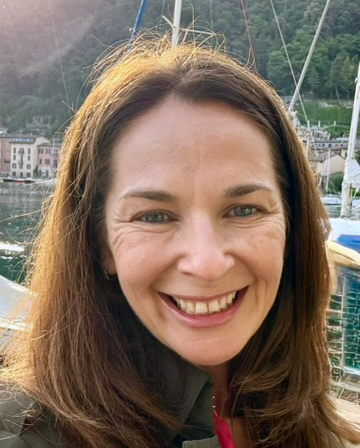
Karina Cohen is the owner of CR Maids, a local cleaning company serving the Greater Denver area. With a background as a global executive in fashion, software, retail, and financial services, she has led business strategy, mergers and acquisitions, and cross-cultural teams across the US, Europe, and Asia.
Karina holds a Global Executive MBA from Duke University’s Fuqua School of Business and a Bachelor of Science in Finance and Marketing from Fordham University. She brings this strategic expertise into CR Maids, where her mission goes beyond spotless homes—she is committed to empowering her team, creating financial security, and giving back to the community.
When she’s not leading CR Maids, Karina homeschools her daughter, serves on the board of Duke University Colorado, and supports initiatives that strengthen families and small businesses.