
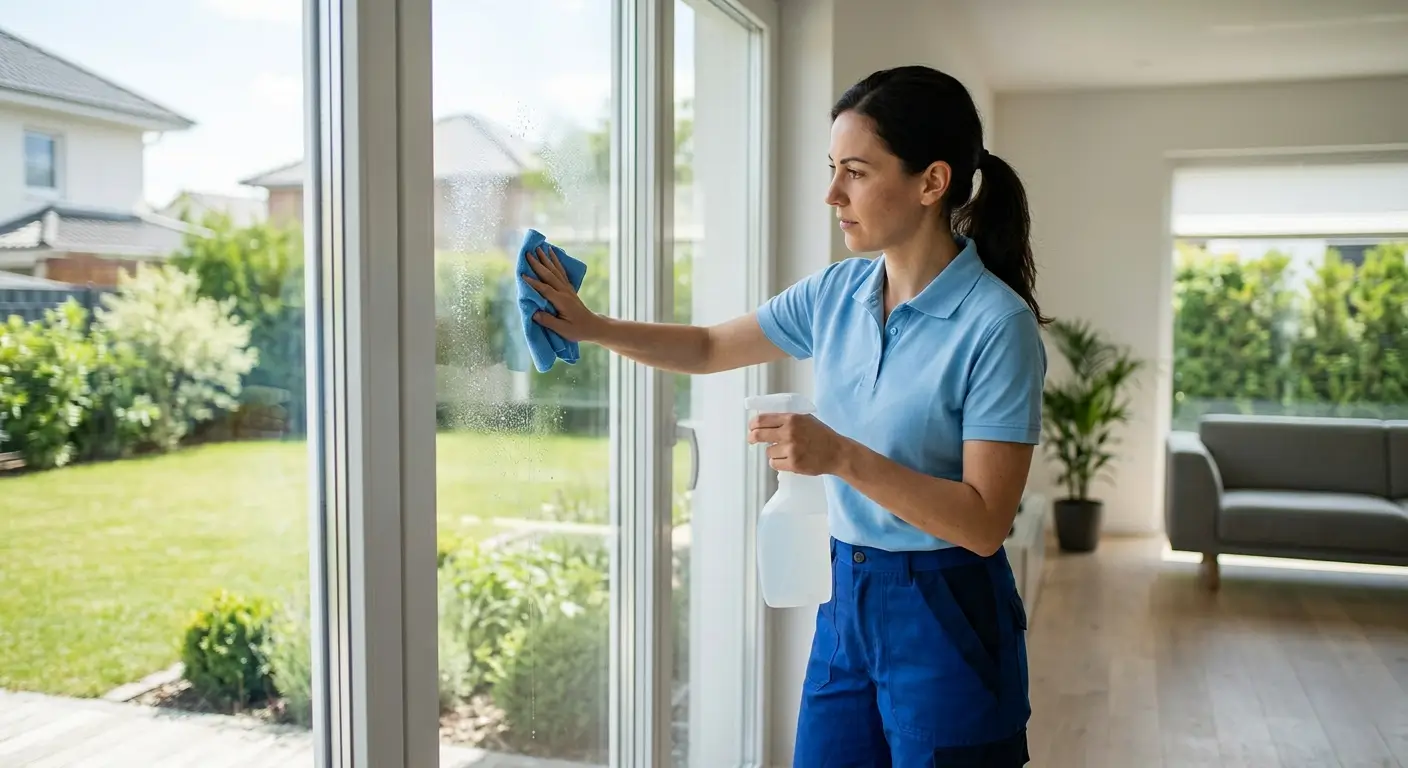
Castle Rock homeowners searching for the best window cleaner often waste money on products that streak, damage frames, or fail on hard water deposits. This guide covers what is the best window cleaner by surface type and when to call a professional.
Why Window Cleaner Choice Matters More Than Most Homeowners Expect
The wrong product on the wrong surface causes more problems than dirty windows. Ammonia-based cleaners damage tinted window film and vinyl frames over time. Abrasive sprays scratch glass coatings. Soap-based formulas leave a film that attracts dust faster than the window was attracting it before cleaning.
What is the best window cleaner depends on three variables:
- Window type: Standard single-pane, double-glazed, tinted, or Low-E coated glass each respond differently to cleaning products.
- Frame material: Vinyl, aluminum, wood, and fiberglass frames each have compatibility requirements with different cleaning chemicals.
- Soil type: Everyday dust and fingerprints need a different approach than hard water mineral deposits, grease near kitchen windows, or construction residue.
Getting this match right is the difference between a streak-free result in one pass and a window that looks worse after cleaning than before.
What is the Best Window Cleaner by Surface Type
Standard glass windows (no coating or tint)
For uncoated, untinted residential glass, the most effective options are:
- Diluted white vinegar solution: One part white distilled vinegar to one part distilled water. Cost-effective, streak-free, and safe for most frame materials. Works well on everyday dust, fingerprints, and light grime. The EPA Safer Choice program recognizes vinegar-based cleaners as a safer alternative to ammonia or solvent-based glass cleaners.
- Ammonia-free commercial glass cleaners: Products like Sprayway or Invisible Glass are formulated specifically for residential glass and leave no ammonia residue. Apply to a microfiber cloth first rather than directly to the glass to control coverage.
- Dish soap and water: A few drops of mild dish soap in warm water cuts through grease and fingerprints effectively on standard glass. Rinse thoroughly to avoid soap film residue.
Tinted or film-coated windows
Ammonia dissolves window tint film over time, causing bubbling and peeling. For tinted glass:
- Ammonia-free, alcohol-free formulas only: Check the product label. Both ammonia and high-concentration isopropyl alcohol degrade tint adhesive.
- Diluted dish soap solution: The safest option for tinted residential windows. Mild, effective, and will not affect the film.
- Avoid: Any product containing ammonia, bleach, or abrasive particles.
Low-E coated and double-glazed windows
Low-E coating is a thin metallic layer on the interior surface of the outer pane. It is more delicate than standard glass and requires:
- pH-neutral, non-abrasive cleaners only: Acidic solutions including undiluted vinegar can degrade Low-E coating with repeated use.
- Distilled water: Tap water contains minerals that leave spots on Low-E glass. Use distilled water in any homemade cleaning solution for this surface type.
- Soft microfiber only: No paper towels, no newspaper, no rough cloths.
Hard water deposit removal
Hard water mineral buildup requires a different approach than standard cleaning. Vinegar or water alone will not dissolve calcium and magnesium deposits effectively:
- Undiluted white vinegar: Applied directly to mineral deposits and left for five minutes before wiping. The acetic acid dissolves calcium carbonate without scratching glass.
- Commercial lime and calcium removers: Products containing citric acid or oxalic acid dissolve mineral deposits on contact. Apply, dwell, then wipe with a microfiber cloth.
- Avoid: Razor blades or abrasive scrubbers on coated or double-glazed glass, these scratch permanently.
Tools That Matter as Much as the Product
The best window cleaner product will still produce streaks with the wrong application method:
- Microfiber cloths: The only material that lifts and traps particles without redistributing them. Wash separately and never use fabric softener, it reduces absorbency.
- Squeegee: The fastest route to a streak-free result on large glass panes. Use in overlapping horizontal strokes from top to bottom. Wipe the blade after each stroke.
- Distilled water: Tap water leaves mineral spots as it dries, particularly in Castle Rock and Castle Pines where hard water is common. Using distilled water in any homemade solution eliminates mineral spotting entirely.
- Avoid paper towels and newspaper: Both leave lint and ink residue that becomes visible when light hits the glass at an angle.
What to Avoid Regardless of Window Type
- Ammonia-based cleaners on tinted glass: Causes irreversible film degradation.
- Bleach on any window surface: Corrodes frame seals and gaskets over time.
- Cleaning in direct sunlight: Product dries before it can be wiped, leaving streaks every time. Clean windows in shade or on overcast days.
- Spraying product directly on the glass: Overspray reaches frame seals and gaskets. Apply to the cloth first.
- Circular wiping motions: Circular strokes redistribute dirt. Use horizontal strokes followed by vertical strokes to identify and remove any remaining residue.
When Professional Window Cleaning Makes More Sense
DIY window cleaning is practical for interior windows and accessible ground-floor exterior glass. The EPA’s indoor air quality guidelines note that clean windows and reduced dust accumulation on glass surfaces contribute to better indoor light quality and lower particulate levels in living spaces. It becomes impractical or unsafe when:
- Upper-floor exterior windows require ladders or extension poles that increase fall risk significantly.
- Hard water deposit buildup has progressed to the point where standard products and technique are not removing the mineral layer.
- Post-construction cleaning leaves fine particulate matter and adhesive residue on glass that requires specialist products and technique.
- Time is the limiting factor for a household maintaining a consistent cleaning schedule.
CR Maids provides house cleaning services across Castle Rock and Castle Pines with eco-friendly product options for households with sensitivities. Interior window cleaning is available as an add-on to any standard or deep cleaning visit.
What is the best window cleaner: the answer depends on your glass
What is the best window cleaner comes down to matching product to surface type. Diluted white vinegar for standard uncoated glass. Ammonia-free dish soap for tinted windows. pH-neutral distilled water solution for Low-E coated glass. Undiluted vinegar or citric acid for hard water deposits. The product matters less than pairing it correctly with a microfiber cloth, squeegee, and the right application technique. CR Maids serves Castle Rock and the Denver metro including Highlands Ranch and Parker with interior window cleaning available on every visit.
Book Your House Cleaning Visit
CR Maids provides house cleaning services across Castle Rock and the Denver metro area with interior window cleaning available as an add-on on every visit. Book your visit here.
Frequently Asked Questions
1. What is the best window cleaner for hard water stains?
Undiluted white vinegar applied directly to the deposit and left for five minutes before wiping with a microfiber cloth dissolves calcium carbonate effectively. Commercial citric acid-based removers work faster on heavy buildup.
2. Is vinegar safe to use on all window types?
Undiluted vinegar is safe on standard uncoated glass but should be diluted for regular cleaning. Avoid repeated use of acidic solutions on Low-E coated windows as it can degrade the metallic coating over time.
3. Why do my windows streak after cleaning?
Streaks are caused by cleaning in direct sunlight, using paper towels instead of microfiber, circular wiping motions, or soap residue left from insufficient rinsing. Switch to a squeegee and microfiber cloth for streak-free results.
4. Can I use ammonia-based cleaners on tinted windows?
No. Ammonia degrades window tint film adhesive over time, causing bubbling and peeling. Use only ammonia-free and alcohol-free formulas on any tinted or film-coated glass.
5. How often should residential windows be professionally cleaned?
Exterior windows in Castle Rock benefit from professional cleaning twice per year, with spring addressing pollen and winter grime and fall resetting before the indoor season. Interior windows can typically be maintained with monthly DIY cleaning between professional visits.
Key Takeaways
- Match product to surface: Vinegar for standard glass, ammonia-free soap for tinted glass, pH-neutral solution for Low-E coated glass, undiluted vinegar or citric acid for hard water deposits.
- Avoid ammonia on tinted windows: Ammonia degrades film adhesive permanently regardless of product concentration.
- Tools matter: Microfiber cloth and squeegee outperform paper towels and circular wiping every time.
- Distilled water: Eliminates mineral spotting from tap water, particularly important in hard water areas like Castle Rock and Castle Pines.
- When to call a professional: Upper-floor exteriors, heavy hard water buildup, post-construction residue, and time constraints all point toward professional window cleaning.

Karina Cohen is the owner of CR Maids, a local cleaning company serving the Greater Denver area. With a background as a global executive in fashion, software, retail, and financial services, she has led business strategy, mergers and acquisitions, and cross-cultural teams across the US, Europe, and Asia.
Karina holds a Global Executive MBA from Duke University’s Fuqua School of Business and a Bachelor of Science in Finance and Marketing from Fordham University. She brings this strategic expertise into CR Maids, where her mission goes beyond spotless homes—she is committed to empowering her team, creating financial security, and giving back to the community.
When she’s not leading CR Maids, Karina homeschools her daughter, serves on the board of Duke University Colorado, and supports initiatives that strengthen families and small businesses.