
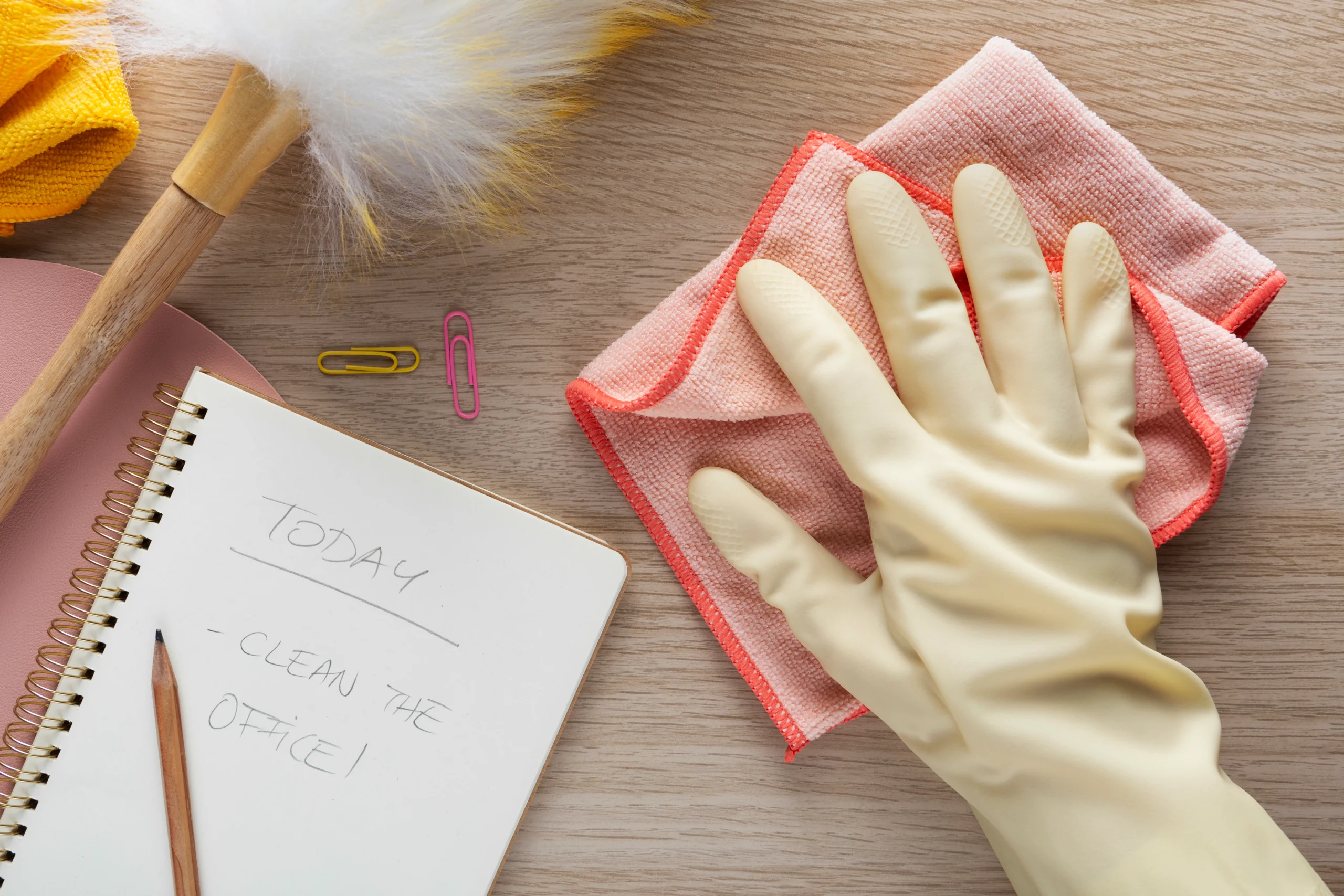
For average-sized homes with one or two occupants, 2 hours of cleaning a week is enough to maintain basic hygiene and order. Larger homes, households with children or pets, or spaces with heavy daily use will need more time or supplemental professional cleaning to stay on top of buildup.
Key Takeaways
- Home Size: Compact apartments can be fully maintained in 2 hours. Larger homes require more time or a tiered approach.
- Number of Occupants: More people generate more mess. Solo households and couples manage best on 2 hours a week. Families typically need more.
- Pets: Fur, dander, and accidents increase cleaning time significantly and often push past the 2-hour limit.
- High-Impact Tasks First: Bathrooms, kitchen surfaces, and high-traffic floors deliver the most return per minute spent.
- Professional Cleaning: A periodic deep cleaning resets buildup that 2-hour sessions cannot reach.
- Recurring Plans: A recurring cleaning schedule removes the pressure of fitting everything into one session.
What Can You Realistically Accomplish in 2 Hours of Cleaning?
Two hours of focused, planned cleaning covers the most important hygiene and appearance tasks in a home.
What Fits in a 2-Hour Cleaning Session:
- Bathroom Sanitizing: Toilets, sinks, mirrors, and shower surfaces cleaned and disinfected.
- Kitchen Surfaces: Countertops, stovetop, appliance exteriors, and sink wiped down.
- Floor Cleaning: Vacuuming carpeted areas and mopping hard floors in main living spaces.
- Dusting: Visible surfaces, shelves, and furniture in living areas.
- Trash Removal: Emptying bins and replacing liners throughout the home.
According to the CDC’s household hygiene guidance, regular cleaning of high-touch surfaces and food preparation areas directly reduces the spread of household illness. Focusing your 2 hours on these zones first gives you the highest hygiene return.
What Factors Determine Whether 2 Hours Is Enough?
The sufficiency of a 2-hour cleaning window depends on four main variables.
Factors That Affect Your Weekly Cleaning Time:
- Home Size and Layout: A one-bedroom apartment can be fully covered in 2 hours. A four-bedroom home with multiple bathrooms cannot.
- Number of Occupants: Each additional person adds dishes, laundry, clutter, and floor traffic. Solo or couple households fit 2 hours well; families often do not.
- Pets: Shedding, accidents, and dander significantly increase the time needed for floors and upholstery. Homes with pets typically need 30 to 60 additional minutes per week.
- Lifestyle and Daily Use: Working from home, cooking daily, or having young children all increase the rate at which surfaces and floors need attention.
How Should You Allocate Time Across a 2-Hour Cleaning Session?
A room-by-room time split prevents any one area from eating up the entire session.
Recommended Time Allocation:
- Kitchen: 30 minutes for counters, stovetop, sink, and appliance exteriors.
- Bathrooms: 30 minutes total, split across two bathrooms at roughly 15 minutes each.
- Living Areas: 20 minutes for dusting, tidying, and surface wipe-downs.
- Bedrooms: 20 minutes for making beds, dusting, and a quick floor pass.
- Floors: 20 minutes for vacuuming and mopping the full home.
Stick to visible, high-traffic surfaces and skip less-used rooms or areas if time runs short. Those can rotate into the following week.
What Cleaning Tools Save the Most Time?
The right tools cut cleaning time without cutting quality.
Time-Saving Tools Worth Investing In:
- Microfiber Cloths: Trap dust and bacteria more effectively than cotton rags and reduce the need for excess product.
- Quality Vacuum with Attachments: Covers carpets, hard floors, and upholstery without switching machines.
- Multi-Purpose Cleaner: Reduces the time spent switching between products across different surfaces.
- Extendable Duster: Reaches ceiling fans, light fixtures, and high shelves without a ladder.
- Cleaning Caddy: Keeps all supplies portable so you move room to room without backtracking.
What Are the Signs That 2 Hours a Week Is Not Enough?
Some homes need more than 2 hours, and the signs show up quickly.
Warning Signs Your Current Routine Is Falling Short:
- Persistent Odors: Smells that return within days of cleaning indicate buildup in areas the 2-hour session is not reaching.
- Visible Dust Within Days: Rapid reaccumulation points to missed surfaces or inadequate dusting tools.
- Bathroom Mold or Mildew: Growth between weekly sessions means the bathroom needs more frequent or deeper attention.
- Sticky Kitchen Surfaces: Grease and food residue that builds between sessions needs either daily wiping or a longer weekly session.
- Constant Clutter: If clearing clutter eats into cleaning time, tidying before the session starts will protect your 2-hour window.
What Can You Do When 2 Hours Is Not Enough?
Several approaches extend the reach of a 2-hour weekly session without adding a full extra cleaning day.
Supplemental Strategies That Work:
- Daily 15-Minute Tidying: A quick pass each evening keeps clutter from compounding before the weekly session.
- Monthly Deep Cleaning Tasks: Rotate baseboards, appliance interiors, windows, and behind-furniture cleaning across the month rather than attempting it all weekly.
- Family Task Sharing: Assigning specific tasks to household members distributes the workload and protects the 2-hour window for high-priority cleaning.
- Automation: Robot vacuums and self-cleaning shower sprays maintain floors and surfaces between manual sessions.
If you have young children or pets at home, consider eco-friendly house cleaning services that use non-toxic, organic products safe for your whole family.
For homes that have accumulated months of buildup, a one-time deep cleaning resets the baseline so that weekly 2-hour sessions become manageable again.
Is Professional Cleaning Worth It When You Only Have 2 Hours a Week?
Professional cleaning solves the gap between what 2 hours covers and what a home actually needs.
What Professional Cleaning Adds:
- Commercial-Grade Equipment: Professional vacuums, steam cleaners, and products reach buildup that standard household tools miss.
- Systematic Coverage: Trained teams work to a checklist that does not skip overlooked areas like baseboards, vents, and behind appliances.
- Time Back: Reclaiming your 2 hours for work, family, or rest has real value beyond the cost of the service.
- Surface Longevity: Correct cleaning products and techniques reduce wear on floors, grout, fixtures, and countertops over time.
CR Maids is a woman-owned residential cleaning company serving homeowners across Castle Rock, Parker, Highlands Ranch, Centennial, Littleton, Lone Tree, and Denver with eco-friendly house cleaning options using organic, non-toxic products safe for kids and pets. For homeowners who want consistent results without the effort, a recurring cleaning plan is the most practical solution.
The Bottom Line on 2 Hours Cleaning a Week
Two hours of cleaning a week is a practical and sufficient baseline for most single-person or two-person households in average-sized homes. Larger homes, families, and pet owners will hit the ceiling of what 2 hours can realistically maintain. The fix is not necessarily more time every week but smarter allocation, daily habits between sessions, and a periodic professional clean to clear what weekly sessions cannot reach.
Let CR Maids Handle the Cleaning So You Don’t Have To
Whether you need a one-time deep clean or a recurring weekly visit, CR Maids serves homeowners across Castle Rock, Parker, Highlands Ranch, and the greater Denver area. Book your cleaning today and come home to a space that’s already done.
Call 720-713-1920 to build a plan around your home and your schedule.
Frequently Asked Questions
1. Is 2 hours of cleaning a week enough for a family home?
For most family homes, 2 hours a week covers basic maintenance but will not reach deep cleaning tasks or less-used areas. Families typically need daily 10 to 15-minute tidying sessions between weekly cleans, or a longer session every two to three weeks.
2. How should I prioritize tasks if I only have 2 hours a week?
Start with bathrooms and kitchen surfaces, as these directly affect hygiene. Move to high-traffic floors next, then visible surfaces in living areas. Save bedrooms and less-used spaces for when time allows.
3. Can professional cleaners do more in 2 hours than I can at home?
Yes. Professional cleaning teams use commercial-grade equipment, systematic checklists, and practiced techniques that cover more ground more thoroughly in the same time window.
4. What cleaning tasks should never be skipped in a weekly routine?
Bathroom sanitizing, kitchen food preparation surfaces, trash removal, and high-traffic floor vacuuming are the four tasks that most directly affect health and hygiene and should anchor every weekly session.
5. How often should a home get a deep clean if you clean 2 hours weekly?
Most homes benefit from a dedicated deep clean every three to four months alongside weekly maintenance. High-traffic homes, households with pets, and those with children may need deep cleaning every six to eight weeks.
6. What is the best way to clean a home efficiently in under 2 hours?
Work top to bottom and room to room without backtracking. Use a portable caddy to carry all supplies, stick to multi-purpose products, and complete one room fully before moving to the next.

Karina Cohen is the owner of CR Maids, a local cleaning company serving the Greater Denver area. With a background as a global executive in fashion, software, retail, and financial services, she has led business strategy, mergers and acquisitions, and cross-cultural teams across the US, Europe, and Asia.
Karina holds a Global Executive MBA from Duke University’s Fuqua School of Business and a Bachelor of Science in Finance and Marketing from Fordham University. She brings this strategic expertise into CR Maids, where her mission goes beyond spotless homes—she is committed to empowering her team, creating financial security, and giving back to the community.
When she’s not leading CR Maids, Karina homeschools her daughter, serves on the board of Duke University Colorado, and supports initiatives that strengthen families and small businesses.