
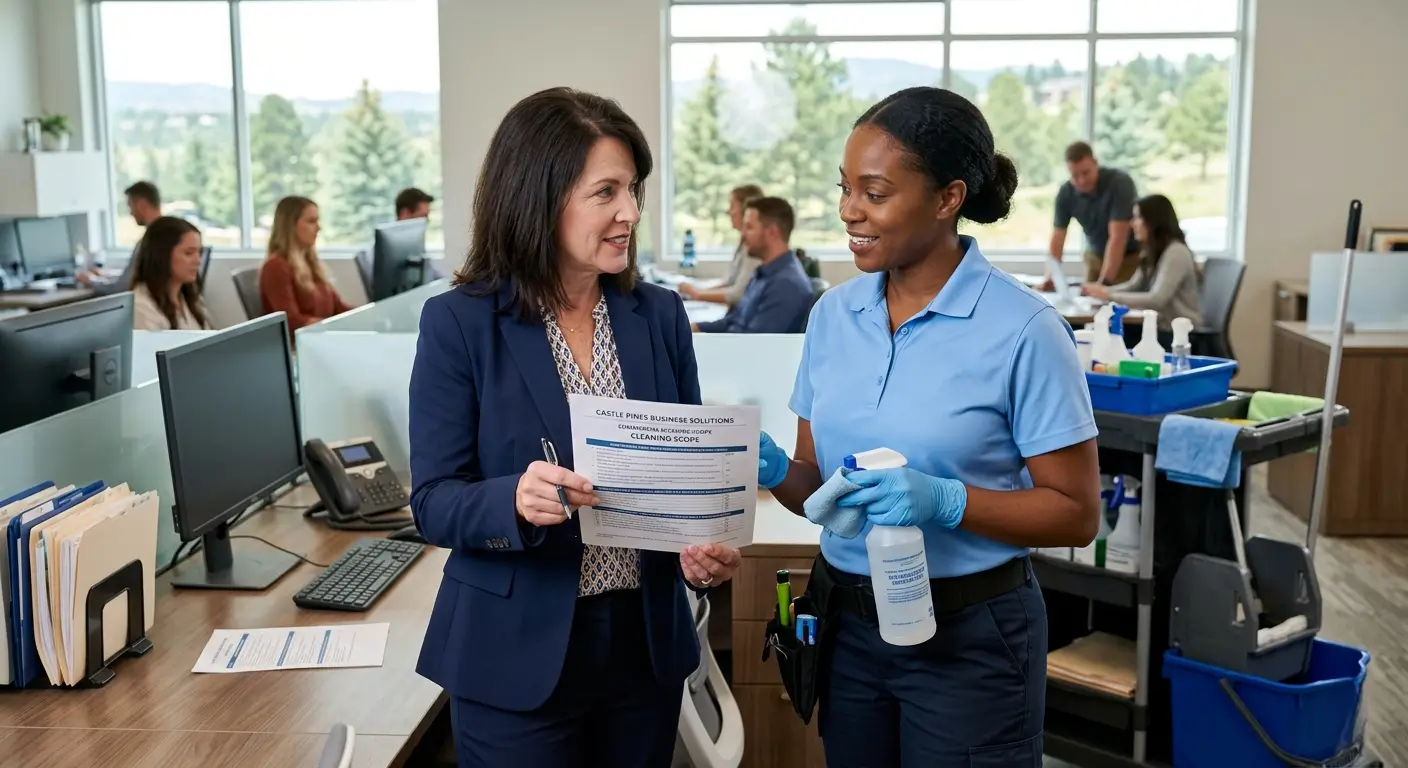
Most Castle Pines businesses assume their commercial cleaning service includes sanitization. Most of the time it does not. This guide answers does commercial cleaning in Castle Pines include sanitization, what genuine sanitization requires, and what to ask any provider before booking.
Why the Assumption Is Wrong More Often Than Not
The most common misconception in Castle Pines commercial cleaning is that cleaning and sanitizing are the same service. They are not. A crew that wipes counters, scrubs toilets, and vacuums floors is cleaning. A crew that applies EPA-registered disinfectant to high-touch surfaces at documented dwell times is sanitizing. Most standard commercial cleaning agreements cover the first. Very few include the second as a verified, documented standard.
The practical consequence is a professional space that looks clean and carries active pathogens on faucet handles, printer panels, and door handles from the previous day’s staff and client contacts. That gap does not announce itself visibly. It shows up in staff illness patterns during cold season and in client hygiene complaints that the business has no protocol to dispute.
For context on what a genuine sanitization standard requires in a professional space, see our guide on sanitized commercial cleaning in Castle Pines.
Does Commercial Cleaning in Castle Pines Include Sanitization: The Honest Answer
The direct answer to does commercial cleaning in Castle Pines include sanitization is: it depends on the provider, and you have to ask explicitly before the first visit.
Standard commercial cleaning scope covers:
- Visible surface cleaning: counters wiped, floors swept and mopped, bathrooms scrubbed.
- Trash removal: bins emptied and bags replaced.
- Floor care: vacuumed and mopped based on surface type.
- Kitchen and break room reset: counters cleared, appliance exteriors wiped, dishes cleared.
What is not automatically included in most standard commercial cleaning agreements:
- EPA-registered disinfectant application: to specific surface categories.
- Documented dwell times: per product and surface.
- High-touch surface coverage: beyond toilets and sinks.
- Product logs and completion verification: confirming sanitization was completed.
The separation between cleaning and sanitizing is not a marketing distinction. It is a technical one, and it determines whether a space is genuinely safe for the next day’s staff and client contacts or only visually clean.
How to Confirm Does Commercial Cleaning in Castle Pines Include Sanitization
The fastest way to confirm whether does commercial cleaning in Castle Pines include sanitization applies to a specific provider is to ask three direct questions before booking:
- What EPA-registered disinfectant do you use, and what is its registration number?
- What dwell time do you observe on high-touch surfaces?
- Which specific surfaces do you sanitize on every visit?
A provider that answers all three specifically is running a documented sanitization protocol. A provider that responds with general statements about thorough cleaning is not.
The Three Things Genuine Sanitization Requires
Understanding does commercial cleaning in Castle Pines include sanitization also means understanding what genuine sanitization actually requires, so a business can evaluate any answer a provider gives.
EPA-registered disinfectants: According to the CDC’s home cleaning and disinfection guidance, disinfectants must be applied at the correct contact time to kill listed pathogens. Only products with EPA registration numbers carry verified kill claims. Any product without an EPA registration number is a cleaner, not a disinfectant, regardless of what the label says.
Documented dwell times: The contact time on a disinfectant label, typically 30 seconds to 10 minutes depending on the product, is the period the product must stay wet on the surface to complete the kill cycle. A crew that sprays and wipes immediately has cleaned the surface. A crew that observes the dwell window has disinfected it. Most standard cleaning crews skip this step when they are running short on time, and there is no visible difference in the result.
High-touch surface coverage: Sanitization targets the surfaces with the highest cross-contamination risk, not the surfaces that look the dirtiest. In a Castle Pines commercial space, those surfaces include:
- Door handles and push plates: every shared door in the facility.
- Light switches: all shared spaces throughout the office.
- Faucet handles: restrooms and kitchen, touched at the moment of peak hand contamination.
- Shared equipment controls: printer panels, copier controls, coffee maker buttons.
- Reception desk contact surfaces: where clients rest hands or sign documents.
- Conference room phone handsets and remote controls: the most consistently missed high-risk surfaces in most Castle Pines offices.
A cleaning protocol that sanitizes the toilet bowl but skips the flush handle and the light switch has addressed the most visible surface and missed the two highest-risk ones.
For more on which specific surfaces require sanitization in each zone, see our guide on what do commercial cleaning services in Castle Pines include.
What Happens When Sanitization Is Not Included
Castle Pines businesses that have been running standard commercial cleaning without a sanitization component are operating with a gap that compresses in winter and during illness seasons. The practical effects:
Staff illness cycling: Without regular disinfection of shared high-touch surfaces, cold and flu viruses transfer between staff members on the printer panel, the break room faucet, and the conference room phone. A single infected staff member can leave active pathogens on these surfaces for hours. Without dwell-time disinfection, those pathogens remain viable for the next contact.
Client hygiene impressions: Eco-conscious and health-aware clients notice the difference between a space that smells of cleaning products from a recent visit and a space that simply looks clean. The absence of any chemical evidence of recent disinfection, combined with the presence of shared surfaces that feel slightly sticky or worn, registers as a maintenance signal that attentive clients absorb across multiple visits.
OSHA compliance exposure: According to OSHA’s general industry sanitation standards, employers are responsible for maintaining workplaces in a sanitary condition. A cleaning protocol without a documented disinfection component does not provide evidence of meeting this standard if a workplace health concern is ever raised.
How to Add Sanitization to an Existing Commercial Cleaning Agreement
For Castle Pines businesses currently running standard commercial cleaning without a sanitization component, adding verified sanitization does not necessarily require switching providers. It requires adding a documented scope layer to the existing agreement.
The scope addition covers:
- Named EPA-registered disinfectant for each zone: registration numbers included in the scope description.
- Defined dwell time per surface category: documented in the service agreement.
- Specific high-touch surface list: covering every surface addressed on every visit.
- Completion verification: confirming the sanitization protocol was executed each visit.
Most professional commercial cleaning providers in Castle Pines can add this scope layer. Providers that cannot or will not are not equipped for a commercial sanitization standard regardless of their general cleaning quality.
The Bottom Line: Does Commercial Cleaning in Castle Pines Include Sanitization
Does commercial cleaning in Castle Pines include sanitization? Not automatically. Standard commercial cleaning covers visible surfaces. Genuine sanitization requires EPA-registered disinfectants, documented dwell times, and verified high-touch surface coverage. None of which are included in most standard agreements unless explicitly confirmed. Castle Pines businesses that confirm all three with their provider protect their staff health, their client experience, and their OSHA compliance exposure. The ones that assume sanitization is included discover the gap in their sick day records.
How CR Maids Handles Sanitization in Castle Pines Commercial Spaces
CR Maids has served Castle Pines and Douglas County for over a decade, with the same background-checked dedicated crews servicing neighboring communities including Highlands Ranch and Lone Tree. Every commercial cleaning agreement that includes sanitization covers EPA-registered disinfectants at documented dwell times, all high-touch surface categories, surface-specific product selection by zone, and completion confirmation with issue reporting before the space opens.
To confirm scope and add verified sanitization to your Castle Pines commercial cleaning agreement, visit our Castle Pines page or book through our online booking system.
Frequently Asked Questions
1. Is sanitization required in every commercial cleaning agreement in Castle Pines?
Not legally required in every agreement, but practically necessary for any business with regular staff and client traffic. OSHA sanitation standards apply to professional workplaces and a documented disinfection protocol provides compliance evidence that standard cleaning alone does not.
2. How do I know if my current commercial cleaning service sanitizes?
Ask for the EPA registration number of the disinfectant they use and the dwell time they observe per surface category. If they cannot answer both questions specifically, they are cleaning surfaces that look clean rather than sanitizing to a verified pathogen-kill standard.
3. Can sanitization be added to an existing commercial cleaning agreement?
Yes. Most professional providers can add a documented sanitization scope layer to an existing agreement. The addition covers named EPA-registered products, defined dwell times, a specific high-touch surface list, and completion verification on every visit.
4. Does adding sanitization significantly increase the cost of commercial cleaning?
Typically 8 to 12 percent above the standard cleaning rate for the same scope and frequency. The premium covers EPA-registered product costs and the time discipline required to observe dwell times on every covered surface.
5. What is the most important surface to sanitize in a Castle Pines office?
Shared high-touch equipment controls, specifically printer panels, coffee maker buttons, and conference room phone handsets. These surfaces are touched by every staff member multiple times daily without handwashing between contacts and are among the least commonly sanitized in standard commercial cleaning protocols.
6. How does sanitization documentation protect a Castle Pines business?
A product log with EPA registration numbers and completion verification on every visit provides evidence of a maintained sanitation protocol if a workplace health concern is raised. Without documentation, a business has no evidence to demonstrate its cleaning standard met OSHA requirements.
Key Takeaways
- Not automatic: standard commercial cleaning in Castle Pines covers visible surfaces. Sanitization requires explicit confirmation with the provider.
- Three requirements: EPA-registered disinfectants, documented dwell times, and verified high-touch surface coverage define genuine sanitization versus surface cleaning marketed as sanitization.
- Three questions: EPA registration number, dwell time per category, and specific surface list are the three questions every Castle Pines business should ask before accepting a sanitization claim.
- OSHA exposure: a cleaning protocol without a documented disinfection component does not provide evidence of meeting OSHA workplace sanitation standards.
- Addable scope: sanitization can be added to most existing commercial cleaning agreements without switching providers.
- Documentation required: product logs and completion verification convert a sanitization commitment into verifiable evidence for compliance and dispute purposes.
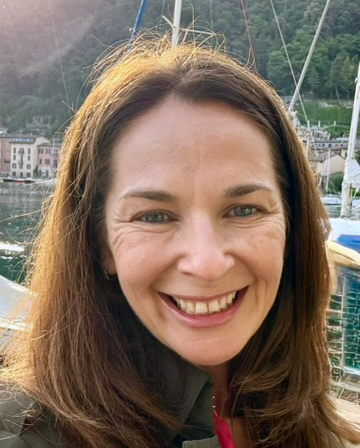
Karina Cohen is the owner of CR Maids, a local cleaning company serving the Greater Denver area. With a background as a global executive in fashion, software, retail, and financial services, she has led business strategy, mergers and acquisitions, and cross-cultural teams across the US, Europe, and Asia.
Karina holds a Global Executive MBA from Duke University’s Fuqua School of Business and a Bachelor of Science in Finance and Marketing from Fordham University. She brings this strategic expertise into CR Maids, where her mission goes beyond spotless homes—she is committed to empowering her team, creating financial security, and giving back to the community.
When she’s not leading CR Maids, Karina homeschools her daughter, serves on the board of Duke University Colorado, and supports initiatives that strengthen families and small businesses.